
Emergency Dentist Near You in Mississauga: Symptoms, First Aid & Your Neighbourhood Guide (2026)
A dental emergency rarely happens at a convenient time. Whether you’ve chipped a tooth at a Streetsville soccer game, woken up with a swollen jaw in Erin Mills, or your child knocked a tooth out playing near Meadowvale, the first few minutes matter — and so does knowing exactly where to go. This guide covers every common dental emergency, what to actually do in the moment, and where to find same-day help wherever you are in Mississauga.
Medically reviewed by Dr. Sahil Gagnani, DMD (McGill University), MDS (AIIMS) — general dentist with advanced surgical training at Eglinton Oak Dental, Mississauga. Last updated 2026.
In Pain Right Now? Call First, Read After.
We hold same-day emergency slots Monday–Saturday. Call 905-607-1112 now, or fill in the quick form below and our team will call you back.
Is this actually a dental emergency? Symptom-by-symptom guide
Not every dental problem needs to be seen today — but many do. Find your situation below for what it means and what to do right now.
Broken or chipped tooth
Rinse your mouth with warm water, save any broken piece in milk or water, and apply a cold compress to the outside of your cheek to reduce swelling. Avoid chewing on that side, and stick to soft foods until you’re seen. A small cosmetic chip with no pain may wait a day or two; a large break that exposes the inner (yellowish or pink) part of the tooth, causes sharp pain with air or temperature, or leaves a sharp edge cutting your tongue needs same-day care. If the tooth feels loose as well as broken, treat it with the same urgency as a knocked-out tooth below. See our full emergency dentist guide for treatment options, from simple bonding to a same-day temporary crown.
Knocked-out (avulsed) tooth
This is a true emergency — time matters most here, and a tooth re-implanted within 30 minutes has a meaningfully better survival chance than one re-implanted after an hour. Pick the tooth up by the crown (the white chewing surface), never the root, since touching the root can damage the ligament cells needed for it to reattach. Rinse it gently under water for no more than 10 seconds without scrubbing, and try to reinsert it into the socket facing the right way if you can — have the person bite down gently on gauze to hold it in place. If reinsertion isn’t possible, keep the tooth in a cup of cold milk (not water, and not dry) or the person’s own saliva, and get to a dentist within 30–60 minutes. Baby teeth are the one exception — do not try to reinsert a knocked-out baby tooth, just control bleeding and call us.
Severe toothache or throbbing pain
Persistent, throbbing pain — especially if it worsens with hot or cold, wakes you at night, or throbs in time with your heartbeat — usually means the nerve inside the tooth is inflamed or infected. Rinse with warm salt water, take an over-the-counter pain reliever as directed on the packaging, and avoid lying flat (which can increase blood flow to the area and worsen throbbing). Don’t apply aspirin directly to the gum or tooth — it doesn’t help and can burn the tissue. Untreated tooth infections don’t resolve on their own and can spread to the jaw or bloodstream, so don’t wait more than a day or two to be seen once pain is this severe.
Swollen face, jaw, or gums (possible abscess)
Facial swelling paired with tooth pain is often a dental abscess — a pocket of infection at the root of a tooth or in the gum — and it needs prompt treatment, sometimes including antibiotics and drainage. Apply a cold compress in 15-minute intervals and call immediately; do not apply heat, which can make swelling worse. Watch closely for the warning signs below (spreading swelling, trouble breathing or swallowing, or swelling near the eye) — these mean go to a hospital emergency room, not a dental clinic.
Lost filling or crown
Not usually painful immediately, but the exposed tooth is vulnerable to further damage, sensitivity to hot and cold, and food packing into the gap. Keep the crown if you still have it — a pharmacy dental cement (like Dentemp) can temporarily reseat it, or in a pinch, sugar-free gum can plug an exposed hole to reduce sensitivity until your appointment. Never use super glue. Book a same-day or next-day appointment; a lost filling left too long lets bacteria in and can turn a simple refill into a root canal.
Bleeding gums or mouth injury
Minor bleeding after brushing or flossing is common and not an emergency — it’s usually a sign of gum inflammation worth mentioning at your next cleaning. Bleeding from a cut, bite, or trauma to the lip, tongue, or gum that doesn’t stop after 10–15 minutes of firm gauze pressure needs prompt attention. Call us for a mouth injury with a dental component; go to a hospital if the bleeding is heavy, won’t stop, or there’s a deep laceration that may need stitches.
Wisdom tooth pain
Sudden pain at the very back of the jaw, sometimes with swelling, a bad taste, or difficulty opening your mouth fully, often signals an impacted or infected wisdom tooth (a condition called pericoronitis when the gum around a partially-erupted tooth gets infected). Warm salt water rinses can ease mild irritation temporarily, but this usually needs an exam and X-ray to confirm what’s happening. See our wisdom tooth removal page for what happens next, including when extraction is and isn’t necessary.
Broken denture or partial
Don’t try to glue a broken denture yourself — over-the-counter adhesives can damage the fit permanently and are difficult for a lab to repair afterward. Avoid wearing it if a piece is sharp or the fit feels different, since a poorly-seated denture can cause sores. Keep all the broken pieces (don’t discard anything) and call for a repair appointment as soon as possible — most simple denture repairs can be turned around quickly.
Broken orthodontic bracket or poking wire
Cover a poking wire with orthodontic wax, a small piece of cotton, or even sugar-free gum to stop it irritating your cheek or tongue, and call your orthodontic provider. If a wire is genuinely stuck in your cheek or gum tissue and won’t budge, that needs same-day attention. This is uncomfortable but rarely a true emergency on its own unless it’s causing a cut that won’t stop bleeding or the discomfort is severe.
Object stuck between teeth
Try gentle flossing first — never use a sharp metal object, which can scratch enamel or push the object further in and damage the gum. If floss doesn’t clear it after a couple of gentle attempts, stop and call us rather than continuing to dig at it.
When to go to the emergency room instead of a dentist
Most dental problems are best handled by a dentist — but a few situations need a hospital emergency department first:
- Uncontrolled bleeding that doesn’t stop after 15 minutes of firm pressure
- Facial swelling that is spreading fast, affects your eye, or makes breathing or swallowing difficult
- A suspected broken jaw or facial fracture
- High fever combined with dental swelling or infection
- A head injury alongside a dental injury
For everything else on this page, a same-day dental appointment is the right call — a hospital emergency room can usually only manage pain and prescribe antibiotics for a dental infection; it cannot perform the filling, extraction, or root canal that actually fixes the problem. Going to a dentist directly, when it’s safe to do so, gets you a real fix faster.
What actually happens at an emergency dental visit
Knowing what to expect can make an already stressful moment feel less overwhelming. A typical same-day emergency visit at Eglinton Oak Dental looks like this:
- Call ahead. Describe what happened — pain level, whether there’s swelling, whether a tooth is broken or missing — so we can prepare the right room and time slot.
- Focused exam. Rather than a full routine checkup, we focus specifically on the problem area, usually with a digital X-ray to see what’s happening below the surface (infection, fracture line, nerve involvement).
- Pain relief first. If you’re in significant pain, the immediate priority is getting you comfortable — this might mean a temporary filling, draining an abscess, or simply confirming the source of pain before deciding next steps.
- A clear plan and price. You’ll get a written explanation of what’s needed (same-day treatment vs. a follow-up appointment) and the cost before anything further is done — no surprises.
- Follow-up if needed. Some emergencies (like a root canal or extraction) are stabilized on the emergency visit and completed at a follow-up appointment once swelling or infection has settled.
Building a simple home dental emergency kit
A few inexpensive items kept in a bathroom cabinet or gym bag can make a real difference in the first few minutes of a dental emergency:
- Sterile gauze pads (for bleeding or holding a knocked-out tooth in place)
- A small container with a lid (to transport a knocked-out tooth in milk)
- Orthodontic wax (for poking wires or brackets)
- Temporary dental cement, such as Dentemp (for a lost filling or crown)
- Over-the-counter pain reliever
- A properly fitted mouthguard, if anyone in the household plays contact sports — the single best prevention tool on this list
Common myths about dental emergencies
“If it doesn’t hurt, it’s not serious”
Not true. A lost filling, a cracked tooth with no immediate pain, or a dying nerve can all be symptom-free at first and become a much bigger problem — and a much bigger bill — if left unchecked.
“Aspirin on the gum helps the pain”
It doesn’t, and it can chemically burn the gum tissue. Take pain relievers as directed by mouth, not applied directly to the tooth or gum.
“A knocked-out tooth can’t be saved”
Many can, if you act within the first 30–60 minutes and handle the tooth correctly (by the crown, kept moist, reinserted or stored in milk). This is the single most time-sensitive dental emergency there is.
“Emergency dental visits are always extremely expensive”
An emergency exam and X-ray is typically $80–$180 — comparable to a regular checkup — and further treatment is quoted separately before you agree to it. See the cost section below.
Same-day emergency care at Eglinton Oak Dental
We are not a 24-hour walk-in clinic — no private dental office genuinely is. What we offer is same-day emergency appointments during our Monday–Saturday hours, 10:00 AM–6:00 PM, for broken teeth, severe pain, swelling, and dental trauma. Call 905-607-1112 as early in the day as possible for the best chance of a same-day slot — new patients are always welcome for emergencies. For the full breakdown of what to expect, cost ranges, and insurance/CDCP coverage for emergency visits, see our complete emergency dentist guide, or book online.
Find emergency dental care by Mississauga neighbourhood
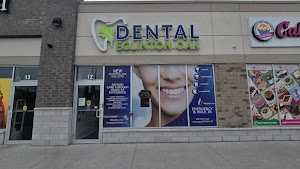
We’re located at 3960 Eglinton Avenue West, Unit 12 — near the Erin Mills/Central Erin Mills corridor — with free parking and a short drive from most west-Mississauga neighbourhoods. Here’s what to expect from each area:
Emergency dentist near Erin Mills & Central Erin Mills
If you live near Erin Mills Town Centre or along the Erin Mills Parkway corridor, you’re typically only a 5–10 minute drive from our Eglinton Avenue West location — the closest neighbourhood we serve. We have a dedicated Erin Mills emergency dentist page with local details, and free parking right outside the door for a fast in-and-out visit when every minute counts.
Emergency dentist near Streetsville & Meadowvale
Coming from Streetsville or Meadowvale, expect roughly a 10–20 minute drive via Erin Mills Parkway or the 403. Both areas have their own dedicated guides — see our Streetsville dentist guide and Meadowvale family dentist guide — but for a genuine same-day emergency, call us directly rather than searching for the closest clinic; a slightly longer drive to a dentist who can actually see you today beats a shorter drive to one who can’t.
Emergency dentist near Churchill Meadows & Lisgar
Churchill Meadows and Lisgar are typically a 10–20 minute drive, mostly via Erin Mills Parkway or Britannia Road. See our Churchill Meadows dentist guide and Lisgar dentist guide for what else we offer in your area alongside emergency care.
Emergency dentist near Lakeview, Port Credit & south Mississauga
If you’re closer to the lake — Lakeview, Port Credit, or Clarkson — you’re a bit further out, typically 15–25 minutes depending on traffic on the QEW or Lakeshore Road. It’s still well within reach for a real emergency; see our Lakeview dentist guide for more on that area specifically.
| Neighbourhood | Typical drive time | |
|---|---|---|
| Erin Mills | 5–10 minutes | Erin Mills emergency dentist page |
| Central Erin Mills | 5–10 minutes | Central Erin Mills dentist guide |
| Churchill Meadows | 10–15 minutes | Churchill Meadows dentist guide |
| Streetsville | 10–15 minutes | Streetsville dentist guide |
| Meadowvale | 15–20 minutes | Meadowvale family dentist guide |
| Lisgar | 15–20 minutes | Lisgar dentist guide |
| Clarkson | 15–20 minutes | Clarkson dentist guide |
| Cooksville | 15–20 minutes | Cooksville dentist guide |
| Mississauga City Centre | 15–20 minutes | City Centre dentist guide |
| Lakeview | 20–25 minutes | Lakeview dentist guide |
| Sheridan, Port Credit, Applewood & Rathwood | 15–25 minutes | Full areas we serve |
Wherever you’re calling from, the process is the same: call 905-607-1112, describe what’s happened, and we’ll get you a same-day slot whenever our schedule allows. Don’t wait until your neighbourhood’s local clinic can fit you in next week — a short extra drive today is almost always worth it for a real dental emergency.
What emergency dental treatment typically costs in Mississauga
An emergency exam and X-ray typically runs $80–$180, with further treatment (fillings, extractions, root canals) quoted separately once we know exactly what’s needed — you’ll always see the price before we start. Most private insurance and the Canadian Dental Care Plan cover emergency exams and essential treatment for eligible patients; see our full emergency cost breakdown or our CDCP coverage guide for details.
| Emergency treatment | Typical cost range |
|---|---|
| Emergency exam & X-ray | $80 – $180 |
| Emergency filling | $150 – $400 |
| Simple extraction | $150 – $350 |
| Root canal (front tooth) | $600 – $1,100 |
| Root canal (molar) | $900 – $1,600 |
Ranges are general 2026 Ontario estimates — your exact cost depends on complexity and is always confirmed in writing before treatment.
Dental emergencies in children: what’s different
Kids’ dental emergencies follow mostly the same rules as adults, with a few important differences. A knocked-out baby (primary) tooth should not be reinserted — doing so can damage the permanent tooth developing underneath. Control any bleeding with gentle gauze pressure and call us; we’ll assess whether the space needs a spacer to guide the adult tooth in later. A knocked-out permanent tooth in a child follows the same urgent steps as an adult: handle by the crown, keep it moist, and get to a dentist within 30–60 minutes.
Kids are also more likely to chip a front tooth on playground equipment or during sports — this is rarely a true emergency unless there’s pain, a visibly exposed nerve (a pink or red dot in the center of the break), or the tooth has become loose. A well-fitted mouthguard for any contact sport is the single most effective way to prevent this. See our kids’ dentistry page for more on pediatric care generally.
How to prevent the next dental emergency
- Wear a properly fitted mouthguard for contact sports — most chipped and knocked-out teeth we see happen during recreational sports.
- Don’t use your teeth as tools to open packaging or bottles.
- Address small cavities and cracked fillings before they turn into a middle-of-the-night emergency.
- Keep up with regular checkups — many abscesses and wisdom tooth emergencies are caught early at a routine visit.
Frequently asked questions about emergency dental care in Mississauga
What counts as a real dental emergency?
Severe pain, a knocked-out or badly broken tooth, facial swelling, uncontrolled bleeding, or an injury to your teeth or jaw all count. A minor chip with no pain, or a lost filling with no sensitivity, can usually wait a day or two.
How fast can I get a same-day emergency appointment?
We reserve same-day slots for urgent dental problems and do our best to see emergency patients within hours of calling. Call 905-607-1112 as soon as your emergency starts, ideally in the morning.
Is there a 24 hour emergency dentist in Mississauga?
Very few private dental offices are genuinely open 24 hours. We offer same-day emergency care during our Monday–Saturday hours (10 AM–6 PM). For an emergency outside those hours involving severe pain, spreading swelling, or facial trauma, go to a hospital emergency room.
Which Mississauga neighbourhoods do you serve for emergencies?
Erin Mills, Central Erin Mills, Churchill Meadows, Streetsville, Meadowvale, Lisgar, Sheridan, Clarkson, Cooksville, Mississauga City Centre, Lakeview, Port Credit, Applewood and Rathwood are all within a 5–25 minute drive — see the table above for the closest guide to your area.
Do I need to be an existing patient to be seen for an emergency?
No. New patients experiencing a dental emergency are always welcome. Call 905-607-1112 and we’ll get you seen as quickly as possible.
What should I do if my child knocks out a tooth?
For a baby tooth, don’t try to reinsert it — just control any bleeding with gauze and call us. For a permanent tooth, follow the same steps as an adult: rinse gently, try to reinsert it or store it in milk, and get to a dentist within 30–60 minutes.
Can a dental emergency wait until tomorrow?
Sometimes. Mild sensitivity, a small chip with no pain, or a lost filling with no discomfort can usually wait a day. Severe pain, swelling, bleeding, or a knocked-out tooth should not wait.
Is emergency dental treatment covered by insurance or CDCP?
Yes, most insurance plans and the Canadian Dental Care Plan cover emergency exams and essential treatment like fillings, extractions, and root canals for eligible patients. We’ll help verify your coverage during your visit.
What if my toothache goes away on its own — do I still need to be seen?
Usually yes. Pain that suddenly stops can mean the nerve inside the tooth has died, which does not resolve the underlying infection. It commonly returns as a painful abscess weeks later, so it’s worth having it checked even if it feels better.
Can I walk in without calling first?
We accommodate walk-ins whenever same-day capacity allows, but calling 905-607-1112 ahead of time gets you seen faster since we can prepare for your specific emergency in advance.
How much does an emergency dentist visit cost without insurance?
Expect roughly $80–$180 for the emergency exam and X-ray, with further treatment such as a filling, extraction, or root canal quoted and agreed on separately. Ask about our interest-free in-house payment plan if the total is more than you can pay upfront.
My tooth pain is bad at night — what can I do until morning?
Rinse with warm salt water, take an over-the-counter pain reliever as directed, sleep with your head slightly elevated to reduce throbbing, and apply a cold compress to the outside of your cheek. Call us first thing when we open for a same-day slot.
Should I go to a walk-in medical clinic for a toothache?
A walk-in medical clinic can prescribe antibiotics or pain medication for infection or pain, but they cannot treat the actual dental problem — you’ll still need a dentist to fix the underlying cause. For most dental emergencies, calling a dentist directly is faster and more effective.