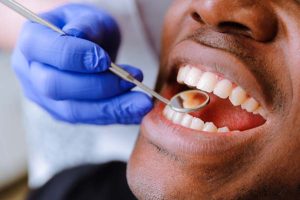
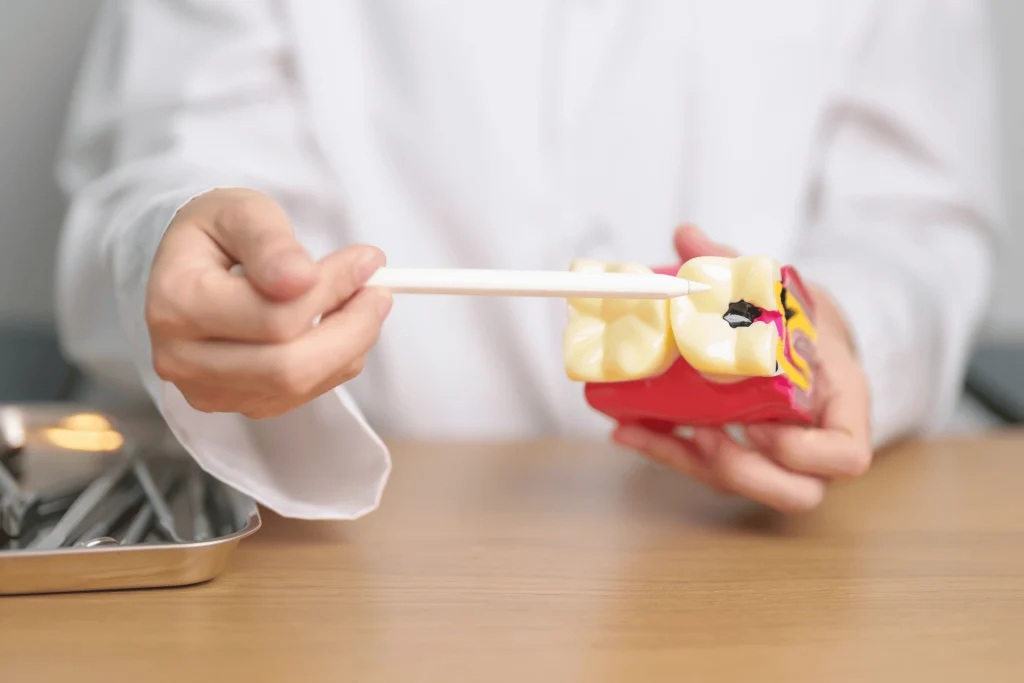
Being told a tooth needs to come out raises a lot of questions at once. Is it really necessary? Will it hurt? What will it cost, and what happens to the gap afterwards? This guide answers those questions in plain language for patients in Mississauga. It covers general tooth extraction, meaning a damaged, infected or loose adult tooth, a baby tooth, or a tooth removed for orthodontic reasons. Wisdom teeth have their own guide: see our wisdom tooth removal cost and recovery guide.
Written by the Eglinton Oak Dental team, 3960 Eglinton Ave W, Mississauga. Last updated October 12, 2026. This article is general information, not a diagnosis. Whether a tooth needs to come out can only be decided after an exam and X-rays.
The short answer: when does a tooth need to be extracted?
A dentist recommends an extraction when a tooth can’t be predictably saved, or when keeping it would cause more harm than removing it. The most common reasons are:
- Decay that has destroyed too much of the tooth to support a filling or a crown, even after a root canal.
- A fracture that runs below the gum line or splits the root. A vertical root fracture usually can’t be repaired.
- Advanced gum disease (periodontitis) that has destroyed so much supporting bone that the tooth is very loose.
- An infection (abscess) where a root canal isn’t possible, has already failed, or isn’t the patient’s preferred option after discussing the alternatives.
- Crowding, when an orthodontic plan needs space. Premolars are the teeth most often removed for this.
- Baby teeth that haven’t fallen out and are blocking the adult tooth underneath.
- Before certain medical treatments. For example, before radiation therapy to the head and neck, a patient’s medical team may ask for teeth with a poor outlook to be dealt with first.
Most dentists treat extraction as a last resort for an adult tooth. Keeping your own tooth is usually better for chewing, bite stability and the jawbone, so the first question at any extraction consultation should be “can this tooth be saved, and what would that involve?”
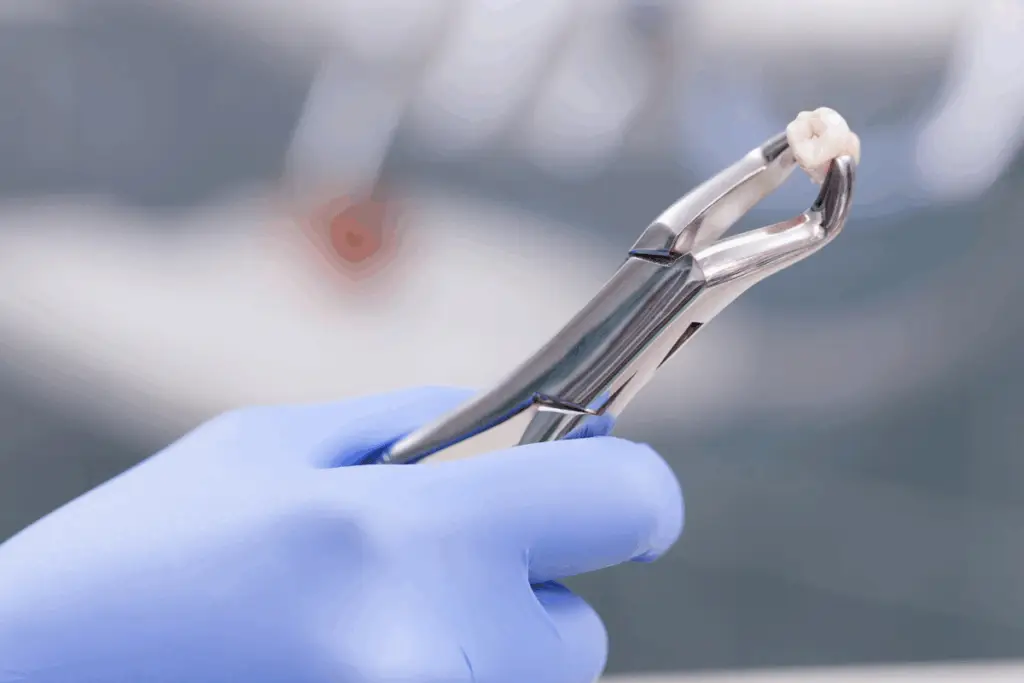
Can the tooth be saved instead? Extraction vs. root canal
When a tooth is badly infected or painful but still has enough healthy structure, a root canal followed by a crown is often the alternative to pulling it. Here is how the two paths usually compare:
| Root canal + crown | Extraction (+ replacement) | |
|---|---|---|
| Keeps your own tooth | Yes | No. The gap needs a decision. |
| Upfront cost | Higher than an extraction alone | Lowest today. Highest if the tooth is later replaced with an implant. |
| Bone and bite | Root stays in the bone, so the bone is preserved | The bone shrinks over time. Neighbouring teeth can drift into the gap. |
| When it’s not an option | Root fracture, too little tooth left, very poor bone support | Rarely “not an option”, but medical history can change how it’s done |
Cost often drives this decision, so it helps to look past today’s bill. Pulling a back tooth is the cheapest choice in the short term. But leaving the gap open for years can let the opposing tooth over-erupt and the neighbouring teeth tilt. Replacing the tooth later with an implant usually costs more than the root canal and crown would have. Our root canal vs. extraction comparison walks through those numbers. There are also good reasons to choose extraction: a tooth with a doubtful long-term outlook, a patient who doesn’t plan to replace a back tooth that isn’t needed for chewing, or a tooth that has already failed treatment.
Simple vs. surgical extraction: what’s the difference?
Dentists divide extractions into two types, and the type mostly determines the length of the appointment, the cost and how much you’ll feel afterwards.
Simple extraction
A simple extraction is for a tooth that is fully visible in the mouth and in one piece. After numbing the area, the dentist uses an instrument called an elevator to gently widen the socket, then lifts the tooth out with forceps. You feel pressure and pushing, but not sharp pain. For a single tooth, the extraction itself often takes only a few minutes. Most of the appointment is spent on the exam, X-ray, numbing and aftercare instructions.
Surgical extraction
A surgical extraction is used when the tooth can’t simply be lifted out. Examples include a tooth broken at the gum line, a tooth with curved or long roots, or a tooth that hasn’t fully come in. The dentist makes a small opening in the gum, may remove a little bone around the tooth, and may divide the tooth into sections so each piece comes out with less force on the surrounding bone. The site is usually closed with a few stitches, often dissolvable ones. Expect more swelling and tenderness than after a simple extraction.
| Simple | Surgical | |
|---|---|---|
| Typical tooth | Visible, intact, straight roots | Broken, heavily filled, curved roots, or not fully erupted |
| Anesthesia | Local freezing | Local freezing, with sedation as an option |
| Stitches | Sometimes | Usually |
| Recovery | A day or two of mild soreness | Several days of swelling and tenderness |
Most simple and many surgical extractions can be done in a general dental office. At Eglinton Oak Dental, Dr. Sahil Gagnani performs most extractions in our office. Cases that are safer in a specialist’s hands, such as a tooth very close to a nerve or the sinus, or a patient with complex medical needs, are referred to an oral and maxillofacial surgeon. See our oral surgery page for the procedures we offer.
Before your extraction: what your dentist needs to know
A safe extraction starts with a good history. Bring a list of everything you take, including over-the-counter medicines and supplements, and mention any of the following:
- Blood thinners such as warfarin, apixaban, rivaroxaban or dabigatran, or antiplatelet medicines such as clopidogrel or daily aspirin. Don’t stop these on your own. Many patients can keep taking them for a routine extraction, with extra steps to control bleeding. Any change to the dose should be agreed with the doctor who prescribed it.
- Bone-strengthening medicines for osteoporosis or cancer, such as bisphosphonates (alendronate, zoledronic acid) or denosumab. They can affect how the jawbone heals, so your dentist may plan the extraction differently.
- Heart conditions, including artificial heart valves or a past heart infection. Some patients need antibiotics before dental surgery.
- Diabetes, a weakened immune system, liver or kidney disease, bleeding disorders, pregnancy, or past radiation to the head and neck.
- Smoking or vaping. Both raise the risk of a painful dry socket.
Your dentist will also take an X-ray of the tooth to see the root shape, the bone around it and any nearby nerve or sinus. This is how a dentist decides between a simple and a surgical approach. It’s also how they give you an accurate quote rather than a guess.
What happens during a tooth extraction, step by step
- Review and consent. The dentist confirms which tooth is being removed, explains the plan and the alternatives, and answers your questions.
- Numbing. A topical gel is applied first, then local anesthetic (“freezing”). You’ll feel numb within a few minutes. Patients who feel anxious can ask about sedation options beforehand.
- Loosening and removal. The tooth is gently loosened in its socket and removed. In a surgical extraction, this is when the gum is opened or the tooth is sectioned. Pressure is normal. Sharp pain isn’t, so tell your dentist and more anesthetic can be given.
- Cleaning the socket. The socket is checked and cleaned. If you’re planning an implant, this is when socket preservation (a bone graft) may be placed. More on that below.
- Closing and gauze. Stitches are placed if needed, and you bite on gauze to help a blood clot form.
- Aftercare instructions. You leave with written instructions and a way to reach the office if you have concerns.
With local anesthetic only, you can usually drive yourself home and return to desk work the same or the next day. If you have sedation, you’ll need someone to take you home.
Does a tooth extraction hurt?
During the procedure, you should feel pressure but not pain, because the area is fully numb. Once the freezing wears off, usually a few hours later, expect soreness. It typically peaks within the first two to three days and then steadily improves. For most simple extractions, over-the-counter pain relief taken as your dentist directs is enough. Follow the package directions and any medical advice you’ve been given. Avoid aspirin for pain unless a doctor has prescribed it for you, because it can increase bleeding. Pain that gets worse after day two or three isn’t the normal pattern and should be checked (see “dry socket” below).
Recovery timeline after a tooth extraction
Everyone heals at a different pace, and a surgical extraction takes longer than a simple one. This is the typical course after removing a single adult tooth:
The first 24 hours
- Keep firm pressure on the gauze for 30 to 45 minutes. A little oozing for the rest of the day is normal. If it bleeds again, bite on a fresh folded gauze (or a damp tea bag) for another 30 minutes.
- Don’t rinse, spit forcefully, use a straw, smoke or vape. These can dislodge the blood clot that protects the socket.
- Rest, and avoid strenuous exercise. Keep your head slightly raised when lying down.
- Use a cold pack on the cheek in short intervals (for example, 15 minutes on and 15 minutes off) to limit swelling.
- Eat soft, cool or lukewarm food once the numbness has worn off, and chew on the other side. Avoid hot drinks while you’re still numb.
Days 2 to 3
- Start gentle warm salt-water rinses after meals (about half a teaspoon of salt in a cup of warm water). Let the water fall out of your mouth rather than spitting hard.
- Brush your other teeth normally, and carefully clean the teeth next to the socket.
- Swelling and stiffness are usually at their worst around now, then start to ease.
Days 4 to 7
- Soreness should be clearly improving. Most people are back to a fairly normal soft-to-regular diet.
- Any stitches that aren’t dissolvable are usually removed at about a week.
Weeks 1 to 2 and beyond
- The gum over the socket usually closes within one to two weeks. The bone underneath keeps remodelling for several months, so a small dip at the site is normal for a while.
Smoking is the single most important thing to avoid. If you smoke, try not to for as long as possible after the extraction, at least the first few days. Nicotine and the sucking action both interfere with healing.
What is a dry socket, and how do you avoid it?
A dry socket (alveolar osteitis) happens when the blood clot in the socket is lost or doesn’t form properly, leaving the bone exposed. It usually shows up two to four days after the extraction as a deep, throbbing pain that may spread toward the ear. It often comes with a bad taste or smell and an empty-looking socket. It’s more likely after lower back teeth and surgical extractions. It’s also more likely in people who smoke, use oral contraceptives, or drink through a straw too soon. A dry socket isn’t usually dangerous, but it is painful. Over-the-counter pain relief often isn’t enough, so call your dentist. Treatment is simple: the socket is gently cleaned and a soothing medicated dressing is placed, which usually brings quick relief.
When to call your dentist, and when to go to the hospital
Call your dentist if you have:
- Bleeding that hasn’t settled after an hour of firm pressure on gauze
- Pain that is getting worse after day two or three rather than better
- Swelling that increases after day three, pus, or a persistent bad taste
- A fever or chills
- Numbness of the lip, chin or tongue that lasts long after the freezing should have worn off
Go to a hospital emergency department or call 911 for trouble breathing or swallowing, swelling that spreads quickly toward the eye, neck or floor of the mouth, a high fever with a swollen face, heavy bleeding that won’t stop, or signs of an allergic reaction. These are medical emergencies, and a dental office isn’t the right place for them, especially outside office hours. Our clinic is open Monday to Saturday, 10 a.m. to 6 p.m. and is not a 24-hour clinic.
How much does a tooth extraction cost in Mississauga?
Fees in Ontario vary by clinic and by how complex the tooth is. As a general 2026 guide for Mississauga, before insurance:
| Service | Typical range (CAD) |
|---|---|
| Simple extraction (erupted adult tooth) | about $150 – $350 per tooth |
| Surgical extraction (broken, curved roots, partly erupted) | about $300 – $700 per tooth |
| Baby tooth extraction | about $150 – $300 |
| Exam and X-ray, if not already done | charged separately |
| Sedation or socket preservation graft | quoted separately, only if needed |
These are typical ranges, not quotes. Your exact fee is given in writing after the exam and X-ray, before any treatment starts. If the extraction is part of a bigger plan, such as an implant, ask for the full cost of the whole plan, not just the extraction. That gives you the real number to compare.
Insurance and the Canadian Dental Care Plan (CDCP)
Most private dental plans cover extractions as a basic or oral-surgery service, commonly at a percentage after any deductible and up to your annual maximum. We can send a pre-determination to your insurer so you know your share in advance. The Canadian Dental Care Plan lists the removal of teeth and roots among its covered oral-surgery services when an oral health provider recommends it. Your share depends on your family’s adjusted net income: no co-payment below $70,000, and a 40% or 60% co-payment in the higher income bands. Some CDCP services need pre-authorization. The fee the CDCP pays can also differ from a clinic’s regular fee, so ask for your out-of-pocket amount before treatment. Dental implants are not covered by the CDCP, so if you’re planning to replace the tooth, ask about bridges and partial dentures as well.
Replacing the tooth: what are your options?
Not every extracted tooth has to be replaced. A wisdom tooth, or a tooth removed for braces, usually isn’t. But when a front tooth or a chewing tooth is lost, the gap affects your appearance, your chewing and, over time, the position of the teeth around it. The jawbone also changes after an extraction. In one well-known clinical study, the ridge lost about half its width within the first year, with most of the change in the first three months. That’s why it pays to think about replacement before the extraction, not months later.
| Option | How it works | Typical cost (CAD) |
|---|---|---|
| Dental implant | A titanium post placed in the bone, topped with a crown. Doesn’t involve the neighbouring teeth. | about $3,000 – $6,000 per tooth including the crown. Grafting is quoted separately. |
| Dental bridge | A false tooth held by crowns on the teeth either side, which have to be shaped. | varies with the number of units. Ask for a written quote. |
| Partial denture | A removable plate carrying one or more teeth | about $800 – $2,000 |
What is socket preservation?
If an implant is likely, your dentist may suggest socket (ridge) preservation. This means placing bone-graft material in the socket right after the extraction, usually covered with a membrane, to limit how much the bone shrinks while it heals. A 2021 Cochrane review of randomized trials found low-certainty evidence that ridge preservation may reduce the loss of bone width and height compared with leaving the socket to heal on its own. It found no clear evidence that any one graft material is better than another. In practice, it’s most useful where bone volume will matter, such as a front tooth or a future implant site. It isn’t needed for every extraction.
How soon can the tooth be replaced?
It depends on the option and the site. Some implants can be placed at the time of extraction, but more often the site is left to heal for a few months first. A bridge or a permanent partial denture is usually made once the gum has settled. If a front tooth is removed, ask about a temporary replacement, such as a simple removable “flipper”, so you aren’t left with a visible gap while you heal.
Special situations
Emergency extractions
A tooth that is badly broken or infected can’t always wait. If the tooth can’t be saved, it can often be removed at an urgent appointment. Facial swelling sometimes needs to settle with treatment first. See our emergency dentistry page for what to do while you wait.
Children’s teeth
Baby teeth are sometimes removed when they’re badly decayed, infected, or blocking an adult tooth. Losing a back baby tooth early can let the space close, so a space maintainer may be recommended. Our kids dentistry page explains how we keep these visits calm.
Extractions for braces
Not every orthodontic plan needs extractions. Many crowding cases can be treated without removing teeth. When extractions are part of a plan, they’re coordinated with the orthodontic treatment. Learn more on our braces and orthodontics page.
Loose teeth from gum disease
A tooth loosened by gum disease isn’t automatically a lost cause. Depending on how much bone remains, gum disease treatment may stabilize it. Ask whether the tooth can be kept with treatment before you decide.
Questions to ask before you agree to an extraction
- Why can’t this tooth be saved, and what would saving it involve?
- Is this a simple or a surgical extraction, and why?
- Will you do it here, or do I need a specialist?
- What will it cost in total, and what will my insurance or the CDCP cover?
- Do I need to change any of my medications? (Ask the prescribing doctor before stopping any.)
- Should I replace this tooth, and if so, when and with what?
- Would socket preservation help in my case?
- What should I expect over the first week, and how do I reach you if something feels wrong?
Frequently asked questions
How long does a tooth extraction take?
Removing a single tooth with a simple extraction often takes only a few minutes. With the exam, numbing and instructions, the appointment usually lasts about 30 to 60 minutes. Surgical extractions take longer.
Can I go to work after a tooth extraction?
After a simple extraction with local anesthetic, many people return to desk work the same or the next day. After a surgical extraction or sedation, plan on a day or two of rest and avoid heavy exercise for a few days.
What can I eat after a tooth extraction?
Stick to soft, cool or lukewarm foods for the first few days, such as yogurt, eggs, mashed potatoes, soup that isn’t hot, and smoothies eaten with a spoon. Chew on the other side and avoid crunchy, hard or spicy food until the area feels comfortable.
When can I drink through a straw after an extraction?
Wait at least 24 hours, and longer if you can. The suction from a straw can pull the blood clot out of the socket and lead to a dry socket.
How long does it take for the gum to heal after an extraction?
The gum usually closes over the socket within one to two weeks. The bone underneath continues to heal and reshape for several months.
Is it better to pull a tooth or get a root canal?
When a tooth can be predictably saved, a root canal and crown usually keep your bite and jawbone healthier than an extraction. Extraction is the better choice when the tooth is fractured, has too little structure left, or has a poor long-term outlook. Your dentist should explain both options for your specific tooth.
How much does it cost to pull a tooth in Mississauga?
A simple extraction typically costs about $150 to $350 per tooth, and a surgical extraction about $300 to $700, before insurance. You receive an exact quote after the exam and X-ray.
Does the CDCP cover tooth extractions?
Yes. The removal of teeth and roots is among the oral-surgery services the Canadian Dental Care Plan covers when an oral health provider recommends it. Your co-payment depends on your family income, and some services need pre-authorization.
Can a tooth be extracted if it is infected or my face is swollen?
Often, yes. Removing the source of the infection is part of the treatment. Sometimes the swelling has to be brought under control first. Spreading swelling, fever, or difficulty swallowing or breathing needs emergency medical care right away.
Do I need to replace a pulled tooth?
Not always. A wisdom tooth, or a tooth removed for braces, usually isn’t replaced. For a front tooth or a chewing tooth, replacing it with an implant, a bridge or a partial denture helps prevent the neighbouring teeth from shifting and protects your bite.
Summary
An extraction is a routine, usually quick procedure, but it shouldn’t be a rushed decision. Ask whether the tooth can be saved and what that would involve. Make sure the extraction is planned around your medical history, and decide on replacement before the tooth comes out. Protect the blood clot for the first few days and avoid smoking. Call your dentist if pain gets worse instead of better.
Have a tooth that’s bothering you?
We’ll examine it, take an X-ray, tell you honestly whether it can be saved, and give you a written estimate before anything is done. Call 905-607-1112, book an appointment online, or use the form below. Eglinton Oak Dental, 3960 Eglinton Ave W, Unit 12, Mississauga. Open Monday to Saturday, 10 a.m. to 6 p.m.
Sources & Further Reading
- Canadian Dental Association: Care after minor oral surgery
- MedlinePlus (U.S. National Library of Medicine): Tooth extraction and Dry socket
- Government of Canada: What services are covered in the Canadian Dental Care Plan
- University College London Hospitals NHS Foundation Trust: Dental extractions: post-operative instructions
- Scottish Dental Clinical Effectiveness Programme: Management of dental patients taking anticoagulants or antiplatelet drugs
- Atieh MA, et al. Interventions for replacing missing teeth: alveolar ridge preservation techniques for dental implant site development. Cochrane Database of Systematic Reviews, 2021.
- Schropp L, et al. Bone healing and soft tissue contour changes following single-tooth extraction: a clinical and radiographic 12-month prospective study. Int J Periodontics Restorative Dent, 2003.