How Much Do Braces Cost in Mississauga? 2026 Prices for Metal, Ceramic & Clear Braces
If you have started pricing orthodontic treatment, you have probably noticed something frustrating: almost nobody publishes real numbers. You call one office and get “it depends,” you call another and get a figure that is thousands of dollars away from the first. This guide fixes that. Below you will find honest, current ranges for braces cost Mississauga patients can actually expect in 2026, what makes one quote higher than another, how insurance and the Canadian Dental Care Plan fit in, and the specific questions to ask before you sign anything.
Everything here reflects general Ontario market pricing rather than a formal quote. Your own number depends on your bite, your treatment length, and the appliance you choose — but by the end of this article you will know roughly where your case is likely to land and whether a quote you have been given is reasonable.
Braces Cost Mississauga: The Short Answer
Here is the range most Mississauga and wider GTA practices work within for a full course of orthodontic treatment in 2026. “Full course” means start to finish, including adjustment appointments — not a monthly payment, and not a deposit.
| Treatment type | Typical Mississauga range (2026) | Usual treatment time |
|---|---|---|
| Traditional metal braces | $3,500 – $7,000 | 18 – 30 months |
| Ceramic (clear/tooth-coloured) braces | $4,500 – $8,000 | 18 – 30 months |
| Lingual braces (behind the teeth) | $8,000 – $13,000 | 18 – 36 months |
| Clear aligners (Invisalign and similar) | $3,000 – $8,500 | 6 – 24 months |
| Partial / minor tooth movement | $1,800 – $3,500 | 4 – 10 months |
| Retainers after treatment (per set) | $300 – $700 | Ongoing |
Put another way: the braces cost Mississauga patients are quoted is driven almost entirely by two variables — the appliance and the number of months. Everything else is detail around those two.
If you want a single number to hold in your head: most straightforward adult and teen cases in Mississauga land between $4,000 and $6,500. Anything far below that usually means a partial case, a promotional short-treatment package, or a quote that excludes records and retainers. Anything far above usually means a complex bite, lingual appliances, or treatment combined with jaw surgery.
Why Braces Cost Mississauga Quotes Vary So Much
Two people can walk into the same clinic on the same day and leave with quotes $3,000 apart. That is not arbitrary. Seven things drive the number:
1. How far your teeth actually have to move
This is the single biggest factor. Closing a small gap between two front teeth is a completely different job from correcting a deep overbite with severe crowding. Orthodontic pricing is essentially a function of appointment count and treatment months, and complexity determines both.
2. How long you will be in treatment
A 10-month case costs less than a 28-month case because you occupy fewer chair hours, need fewer wires, and require fewer adjustment visits. When a practice quotes you a low number, ask how many months it assumes — a cheap quote attached to an unrealistically short timeline tends to become an expensive one later.
3. The appliance you choose
Metal brackets are the least expensive because the material cost is low and they are efficient to work with. Ceramic brackets cost more, are more fragile, and can take slightly longer. Lingual braces are custom-manufactured for the inside surface of your teeth and require specialised training, which is why they sit at the top of the range.
4. Whether you see a general dentist or an orthodontist
In Ontario, general dentists are permitted to provide orthodontic treatment, and many do — particularly for mild to moderate cases and clear aligner therapy. Certified specialists in orthodontics complete additional postgraduate training and typically charge more, which is usually appropriate for complex skeletal or surgical cases. Neither route is automatically “better”; the right question is whether your specific case matches the provider’s experience.
5. What the quote includes
Some quotes are all-inclusive. Others exclude the initial records, the retainers at the end, or replacement retainers. A $4,200 all-inclusive fee can genuinely be cheaper than a $3,800 fee that adds $400 for records and $600 for retainers.
6. Your age and growth stage
Children in mixed dentition sometimes need a shorter, cheaper interceptive phase first (roughly $1,500 – $3,000), followed by full braces later. Adults do not have growth working in their favour, so certain corrections take longer.
7. Extra procedures your case requires
Extractions, temporary anchorage devices, expanders, or gum treatment before starting all add to the total. These are usually billed separately, so ask specifically whether your quote assumes any of them.
Metal Braces Cost in Mississauga
You can see all of the options we offer side by side on our braces and orthodontics page.
Traditional metal braces remain the workhorse of orthodontics, and for good reason: they can correct virtually anything, they do not depend on patient compliance, and they cost less than every alternative.
Expect $3,500 to $7,000 for a full case in Mississauga, with most standard teen and adult cases falling between $4,000 and $5,500. Stainless steel brackets are bonded to the front of each tooth and connected by an archwire that is adjusted every six to eight weeks.
What you are paying for over 18 to 30 months typically includes the initial diagnostic records, bonding appointment, all routine adjustments, wire changes, emergency visits for a loose bracket, removal of the appliance, and — in most all-inclusive practices — your first set of retainers.
The trade-off is visibility. Metal brackets are noticeable, and for adults in client-facing work that matters enough to justify the ceramic or aligner upgrade. For teenagers, that concern is often smaller than parents expect; coloured elastics have made metal braces something many kids genuinely enjoy customising.
Ceramic and Clear Braces Cost
Ceramic braces work identically to metal ones but use tooth-coloured or translucent brackets that blend with your enamel. From a normal conversational distance they are considerably less obvious.
Expect $4,500 to $8,000 in Mississauga — generally $800 to $1,500 more than the metal equivalent for the same case. Some practices only place ceramic brackets on the upper arch (the visible one) and metal on the lower, which trims the premium.
Three honest drawbacks worth knowing before you pay the upgrade:
- They are more fragile. Ceramic brackets chip and debond more often than steel, meaning more repair visits.
- The elastic ties can stain. The brackets themselves resist staining, but the clear elastic modules holding the wire absorb pigment from coffee, tea, turmeric, and red wine. They are replaced at every adjustment, so staining is temporary — but it is visible in between.
- Treatment can run slightly longer. Higher friction between bracket and wire means some movements take a little more time.
Note that “clear braces” is used loosely online. Some people mean ceramic brackets; others mean clear aligner trays. They are different treatments at different price points, so clarify which one a quote refers to.
Lingual Braces: The Invisible Fixed Option
Lingual braces are bonded to the tongue side of the teeth, making them genuinely invisible from the front. Each bracket is custom-made for your individual tooth anatomy, and placement requires specific training.
Expect $8,000 to $13,000. They suit adults who need the correcting power of fixed braces but cannot accept visible hardware for professional reasons. Be prepared for a real adjustment period: tongue irritation and a temporary lisp are common for the first few weeks, and cleaning takes more effort. Not every practice offers them.
Clear Aligners vs Braces: The Cost Comparison People Actually Search For
This is the comparison that generates more questions than any other, so let us be precise about it.
For a comparable case, clear aligners and ceramic braces now cost roughly the same in Mississauga — typically $4,500 to $7,000. The old assumption that aligners are dramatically more expensive is out of date; competition and manufacturing improvements have compressed the gap significantly since the early 2010s.
Where the price genuinely diverges:
- Simple cases favour aligners. A mild crowding case can often be treated with a short aligner course for $3,000 to $4,500 — cheaper than a full fixed-brace case, because it is fewer months of active treatment.
- Complex cases favour metal braces. Severe rotations, large bite corrections, and cases needing extraction space closure are usually both cheaper and more predictable with fixed appliances.
- Aligners depend on you. The quoted price assumes 20 to 22 hours of daily wear. Inconsistent wear extends treatment, sometimes requires additional trays, and can trigger refinement fees.
We have written a dedicated breakdown of this if you want the full side-by-side: Invisalign vs braces cost comparison. For aligner-specific pricing, see how much Invisalign costs in Mississauga and Canada and our overview of clear aligners in Mississauga.
Braces Cost Mississauga: Adults vs Teens vs Children
Children (roughly ages 7 to 11)
The Canadian Association of Orthodontists recommends a first orthodontic assessment around age seven. That does not mean braces at seven — it means catching problems like crossbites, severe crowding, or jaw growth discrepancies while growth can still be guided. If early (Phase I) treatment is recommended, it typically costs $1,500 to $3,500 and runs six to twelve months. A second full phase in the teen years is often still needed, and most practices credit some portion of Phase I toward it — ask whether yours does.
Teenagers (roughly ages 12 to 17)
This remains the classic window: permanent teeth are in, jaw growth is still cooperative, and treatment tends to be efficient. Standard teen pricing sits at $4,000 to $6,000 for metal braces. Teen aligner systems with compliance indicators are widely available and priced similarly to ceramic braces.
Adults
Roughly one in four orthodontic patients in Canada is now an adult. Costs are similar to teen treatment but skew slightly higher, for two reasons: adults more often choose aesthetic appliances, and adult cases more frequently involve existing dental work, gum considerations, or previously shifted teeth after an earlier round of braces. Budget $4,500 to $7,500 for a typical adult case.
One thing worth saying plainly: there is no age limit on orthodontics. Healthy bone and healthy gums matter far more than the number on your birth certificate. Adults in their fifties and sixties are treated routinely.
How Mississauga Compares to Toronto, Ontario and the Rest of Canada
People comparing a braces cost Mississauga quote against one from another city usually find less difference than they expect. Search interest around “braces cost Ontario,” “braces cost Toronto,” and “braces cost Canada” is high, and the honest summary is that regional variation is real but smaller than people assume.
- Downtown Toronto tends to run 10 to 20 per cent above Mississauga for equivalent treatment, driven mostly by overhead.
- Mississauga, Brampton, Oakville and Milton sit in a broadly similar band as one another.
- Smaller Ontario cities often quote slightly less, though the difference rarely justifies a two-hour drive every six weeks for two years — and it is worth remembering that every adjustment appointment is a trip.
- Across Canada, Ontario and British Columbia generally sit at the higher end, with the Prairie provinces somewhat lower.
If you are comparing quotes across cities, normalise them first: same appliance, same estimated months, same inclusions. Otherwise you are comparing two different products.
What Should Be Included in Your Quote (and What Often Is Not)
This is where two braces cost Mississauga quotes that look thousands apart often turn out to be nearly identical. Before comparing two numbers, confirm both cover the same things. A complete orthodontic fee normally includes:
- Diagnostic records — panoramic X-ray, cephalometric X-ray, photographs, digital scan or impressions
- Treatment planning and case setup
- Placement of the appliance
- All scheduled adjustment appointments for the treatment duration
- Wires, elastics, and routine components
- Emergency visits for loose brackets or poking wires
- Appliance removal and polishing
- Your first set of retainers
Frequently excluded, and worth asking about explicitly:
- Replacement retainers. Lost or broken retainers typically cost $300 to $700 per set, and most people will need at least one replacement over a lifetime.
- Extractions required to create space, usually billed by the dentist or oral surgeon performing them.
- Extended treatment beyond the estimated months, which some practices bill monthly after the quoted period.
- Aligner refinements beyond an included number of rounds.
- Routine cleanings and checkups, which continue during orthodontic treatment and are billed as normal general dentistry. Braces make cleaning harder, so many patients move to a three or four-month recall — budget for that. Our guide to teeth cleaning costs in Mississauga covers those fees.
- Restorative work discovered during treatment, such as a cavity found under a bracket.
Does Insurance Cover Braces in Canada?
Often, partially — and the structure of orthodontic benefits catches many people off guard because it works differently from regular dental coverage.
The lifetime maximum
Unlike your annual dental maximum, which resets each January, orthodontic coverage is normally a lifetime maximum per person. Typical Canadian employer plans provide $1,500 to $3,000 lifetime, at a coinsurance rate of 50 per cent. Once it is used, it does not come back.
Practically, on a $5,000 case with a $2,000 lifetime maximum at 50 per cent coverage, the plan pays $2,000 (50 per cent of $5,000 is $2,500, capped at the $2,000 maximum) and you pay $3,000.
Age limits
Many plans restrict orthodontic benefits to dependents under 19 or 21. Adult orthodontic coverage exists but is much less common — check your booklet rather than assuming.
Payment schedules
Insurers usually pay orthodontics in instalments rather than as a lump sum: an initial payment at appliance placement, then periodic payments over the treatment period. Your practice can submit a pre-determination before you start, which tells you in writing exactly what the insurer will pay.
Two plans in one household
If a child is covered under two parents’ plans, coordination of benefits can meaningfully reduce out-of-pocket cost. The primary plan pays first, and the secondary plan may cover part of the remainder up to its own limits.
Always request a pre-determination before starting. It takes a few weeks and removes essentially all of the guesswork. Our broader guide to affordable dental care in Mississauga walks through how to read your plan.
Does the Canadian Dental Care Plan (CDCP) Cover Braces?
This question comes up constantly, so here is the direct answer: the CDCP does not currently cover orthodontic treatment such as braces or clear aligners. The plan is built around preventive, diagnostic, restorative, endodontic, periodontal, prosthodontic and oral surgery services — cleanings, exams, X-rays, fillings, extractions, root canals, dentures and similar care.
That does not make the CDCP irrelevant to an orthodontic patient. If it covers your exams, cleanings and any fillings needed before treatment, your remaining budget goes further on the braces themselves. Coverage levels also depend on the CDCP fee schedule, and some services carry a balance the patient pays. We explain how this works locally in our CDCP guide for Mississauga patients and on our Canadian Dental Care Plan page.
For children under 17 in lower-income households, Ontario’s Healthy Smiles Ontario program covers a range of dental services, but routine orthodontics is not part of it. Limited orthodontic assistance exists in Ontario for severe, medically significant conditions through specific programs, assessed case by case.
Payment Plans: How Most People Actually Afford Braces
Very few patients write one cheque for orthodontic treatment. The standard structure across Mississauga practices is:
- A deposit at the start, commonly 15 to 25 per cent of the total.
- Monthly instalments across the treatment period, frequently interest-free when administered in-house.
- Insurance assignment, where the practice bills your insurer directly so you only fund the difference.
On a $5,000 case with a $1,000 deposit and 24 months of payments, that is roughly $167 per month — and with a $2,000 insurance benefit, closer to $83. Framed that way, treatment that sounded impossible often becomes manageable.
Two things to check carefully: whether the in-house plan is genuinely interest-free (many are; third-party financing frequently is not), and what happens to the payment schedule if treatment runs longer than estimated.
“Cheap Braces” in Mississauga: What to Watch For
Not every low braces cost Mississauga offer is a bad deal — but some are low for reasons that surface later, so it is worth knowing what to check.
Searches for cheap or discount braces are common, and cost-consciousness is completely legitimate. But some low quotes are low for reasons that cost more later. Before committing to an unusually cheap offer, confirm:
- Who is actually treating you and how often you will be seen by the dentist or orthodontist rather than only by an assistant.
- Whether records and retainers are included, or bolted on afterward.
- What happens if treatment runs long — is there a monthly overrun charge?
- Whether it is a full case or partial treatment. Aligning the six visible front teeth is cheaper than correcting a bite, and the two are sometimes advertised at similar prices.
- Whether the plan involves remote or mail-order aligners with no in-person supervision. The Canadian Dental Association and provincial regulators have raised concerns about direct-to-consumer orthodontics precisely because tooth movement without clinical monitoring can cause root damage, bite problems and gum recession that cost far more to fix than the savings.
The most expensive orthodontic treatment is the one that has to be redone.
Is Treatment Worth the Money? The Non-Cosmetic Case
Straight teeth photograph well, but the clinical arguments are the ones that justify the spend over a lifetime:
- Crowded teeth are harder to clean. Overlapping surfaces trap plaque where brushing and flossing cannot reach, which raises the long-term risk of decay and gum disease. Our page on gum disease treatment covers what that progression looks like.
- Bad bites wear teeth unevenly. An untreated deep bite or crossbite concentrates force on a few teeth, causing chipping, flattening, and eventually the need for crowns or other restorations.
- Jaw strain. Some patients with significant bite discrepancies experience jaw muscle fatigue, clicking or headaches. Where relevant, our TMJ treatment page explains the assessment.
- Speech and function. Certain open bites affect articulation and make biting into food genuinely difficult.
Compared against decades of restorative work that misalignment can eventually require, a one-time orthodontic fee often looks like the cheaper path.
What the Braces Timeline Actually Looks Like
- Consultation. Clinical exam, discussion of your goals, an initial view of options and approximate cost. Many practices offer this at no charge or at a modest fee.
- Records appointment. X-rays, photographs and a digital scan, used to build the treatment plan and the written fee estimate.
- Plan review. You see the proposed approach, the estimated duration, the exact fee, and the payment schedule. This is when a pre-determination goes to your insurer.
- Placement. Bonding brackets takes roughly one to two hours. Expect three to five days of general tenderness afterward; soft food and over-the-counter pain relief handle it.
- Adjustments every six to eight weeks. Short appointments, typically 15 to 30 minutes, where wires are changed and progress is checked.
- Debonding. Braces come off, adhesive is polished away, and final records are taken.
- Retention — permanently. A fixed wire behind the front teeth, a removable retainer at night, or both. Teeth shift for life; retainers are what protect the investment you just made.
Orthodontic Care in Mississauga: Local Considerations
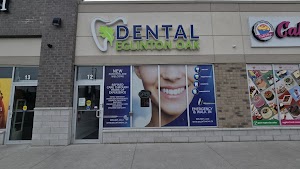
Eglinton Oak Dental is at 3960 Eglinton Avenue West, Unit 12, in the Central Erin Mills corridor, and we see patients from Erin Mills, Churchill Meadows, Streetsville, Meadowvale, Lisgar, Clarkson and across Mississauga.
Two practical points specific to this city. First, orthodontic treatment means a visit every six to eight weeks for up to two and a half years, so proximity to home, school or work matters more than most people weigh at the consultation stage — a clinic 25 minutes away costs you real time roughly twenty times over the course of treatment. Second, our hours run Monday to Saturday, 10:00 a.m. to 6:00 p.m., and Saturday availability is genuinely useful for families trying to avoid pulling a teenager out of class every six weeks.
At Eglinton Oak Dental we provide orthodontic assessment and treatment planning, and we treat suitable cases with clear aligner therapy in-house. Where a case is better served by fixed appliances or by a certified specialist in orthodontics, we say so and coordinate that referral rather than stretching a treatment to fit what we offer. You can read more about our approach on the Invisalign and clear aligner page or in our overview of dental specialists in Mississauga.
Questions to Ask Before You Get a Braces Cost Mississauga Quote
Take these to any consultation. The answers will tell you more than the headline price:
- What is the total fee, and what exactly does it include?
- How many months is this quote based on, and what happens if treatment runs longer?
- Are diagnostic records included, or billed separately?
- Are retainers included? How much are replacements?
- Who will be adjusting my braces at each visit?
- Will you submit a pre-determination to my insurance before we begin?
- What is the payment schedule, and is the plan interest-free?
- What are my realistic alternatives, and what does each cost?
- What happens if I move away partway through treatment?
- Can I see before-and-after cases similar to mine?
Frequently Asked Questions About Braces Cost in Mississauga
What is the average braces cost Mississauga patients pay?
Most full cases in Mississauga run between $4,000 and $6,500 in 2026. Traditional metal braces typically range from $3,500 to $7,000, ceramic braces from $4,500 to $8,000, and clear aligners from $3,000 to $8,500, depending on how complex your case is and how long treatment takes.
How much do braces cost in Ontario compared to Mississauga?
Ontario pricing is broadly similar across the GTA. Downtown Toronto tends to run about 10 to 20 per cent higher than Mississauga for equivalent treatment, while Mississauga, Brampton, Oakville and Milton sit in a comparable band. Smaller Ontario cities are sometimes slightly lower, though the savings rarely offset travelling for an appointment every six to eight weeks.
Are ceramic braces worth the extra cost?
If visible hardware would genuinely affect your work or confidence, the $800 to $1,500 premium is usually money well spent. Be aware that ceramic brackets are more fragile than metal, the clear elastic ties can pick up stains between adjustments, and some cases run marginally longer.
Does insurance cover braces in Canada?
Many employer plans include an orthodontic benefit, typically a lifetime maximum of $1,500 to $3,000 per person at 50 per cent coinsurance, often restricted to dependents under 19 or 21. Ask your dental office to submit a pre-determination before starting so you know in writing what will be paid.
Does the CDCP cover braces?
No. The Canadian Dental Care Plan does not currently cover orthodontic treatment such as braces or clear aligners. It covers preventive, diagnostic, restorative, endodontic, periodontal, prosthodontic and oral surgery services, which can still reduce your overall dental spending while you pay for orthodontics separately.
Can I pay for braces monthly?
Yes. Most Mississauga practices structure treatment as a deposit of roughly 15 to 25 per cent followed by monthly instalments across the treatment period, frequently interest-free in-house. On a $5,000 case over 24 months, that often works out to under $200 a month before any insurance benefit.
Are braces cheaper than Invisalign?
For a comparable case, metal braces are usually the cheapest option, while ceramic braces and clear aligners sit at similar price points. Simple cases are often cheaper with aligners because treatment is shorter, whereas complex bite corrections are typically both cheaper and more predictable with fixed braces.
How much do braces cost for adults?
Adult treatment in Mississauga generally runs $4,500 to $7,500. It skews slightly higher than teen treatment because adults more often choose aesthetic appliances and more often have existing dental work, gum considerations, or teeth that have shifted after earlier orthodontics.
Do I still need to pay for cleanings during orthodontic treatment?
Yes. Regular exams and cleanings continue during treatment and are billed separately as general dentistry. Braces make cleaning harder, so many patients switch to a three or four-month recall while in treatment — worth including in your budget.
What happens if I do not wear my retainer?
Teeth shift throughout life, and the tendency to relapse is strongest in the first year after treatment. Skipping retainer wear is the most common reason people end up needing a second round of orthodontics, which is why replacement retainers at $300 to $700 are far cheaper than repeating treatment.
Get a Written Braces Estimate in Mississauga
Every braces cost Mississauga figure in this article is a general market range, not a quote. The only way to know what braces cost for your specific case is an assessment. At Eglinton Oak Dental we will look at your bite, explain which options genuinely apply to you, give you a written estimate with the inclusions spelled out, and submit a pre-determination to your insurer before you commit to anything.
Call 905-607-1112 or fill in the form below and our team will confirm your consultation. You can also book an appointment online.
Related Reading
- Braces & orthodontics in Mississauga
- Invisalign vs braces: full cost comparison
- How much does Invisalign cost in Mississauga and Canada?
- Clear aligners in Mississauga: cost and comparison
- Is Invisalign covered by insurance in Canada?
- The CDCP in Mississauga: eligibility and coverage
- Dentist in Mississauga: your questions answered
- Adult braces: discreet options and cost
Sources & Further Reading
- Canadian Dental Association
- Canadian Association of Orthodontists
- Ontario Dental Association
- Royal College of Dental Surgeons of Ontario
- Government of Canada — Canadian Dental Care Plan
This article provides general information about braces cost in Mississauga and is not a quote or a substitute for a clinical examination. Fees vary by case; please request a written estimate from your dental office.