Braces & Orthodontics in Mississauga
Straighter teeth, a healthier bite, and a plan that fits your budget — metal braces, ceramic braces and clear aligners explained honestly, with 2026 costs.
Prefer something discreet? Compare with our clear aligners in Mississauga.
Home › Dental Services › Braces & Orthodontics
Braces in Mississauga are more common than most people realise, and not only among teenagers. Orthodontics is the branch of dentistry that moves teeth into better positions and corrects how the upper and lower jaws meet. Most people come to us wanting a straighter smile, but the reason we recommend treatment is usually broader than appearance: crowded teeth are harder to clean, an uneven bite wears enamel unevenly, and a deep or crossed bite can strain the jaw joint for decades. If you are comparing braces in Mississauga, this page sets out every option, what each one costs in 2026, and how to work out which is right for you.
Your Options
Types of braces in Mississauga and how they differ
Metal Braces
Stainless steel brackets and archwires. The most versatile and least expensive option, and still the best answer for complex bites.
Ceramic / Clear Braces
Tooth-coloured brackets that blend with enamel. The same mechanics as metal, considerably less visible, slightly higher cost.
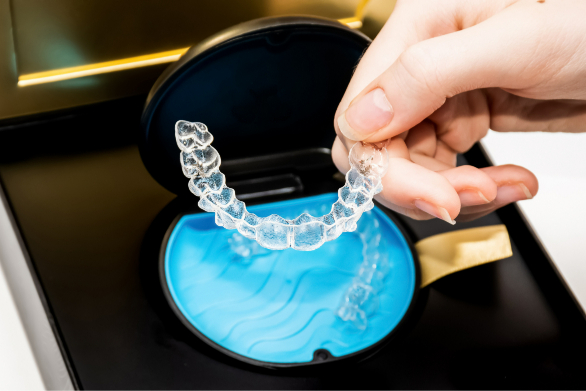
Clear Aligners
Removable transparent trays worn 20–22 hours a day. Excellent for mild to moderate crowding and spacing. See Invisalign.
Lingual Braces
Fixed to the tongue side of the teeth, so they are invisible from the front. A specialist option for adults who cannot show hardware.
Early / Interceptive Care
Short first-phase treatment for children, guiding jaw growth and creating space while growth is still on your side.
Retainers
Fixed wires or clear night retainers. Teeth shift for life — retention is what protects the result you paid for.

Problems orthodontics corrects
- Invisalign vs Braces: Full Cost Comparison
- Crowding: overlapping teeth that trap plaque where a brush cannot reach
- Spacing and gaps: including the midline gap between the front teeth
- Overbite: upper front teeth covering the lower ones too heavily
- Underbite: lower teeth sitting in front of the uppers
- Crossbite: a mismatch that wears specific teeth and can shift the jaw
- Open bite: front teeth that do not meet, affecting biting and speech
- Relapse: teeth that have drifted after earlier braces and no retainer
A short assessment tells you which of these apply to you and whether they are worth treating. Most people asking about braces in Mississauga have two or three of them at once.
Choosing between braces and aligners
The honest rule of thumb: simple cases are usually faster and cheaper with clear aligners, complex bite corrections are usually more predictable and cheaper with fixed braces, and ceramic braces sit between the two on both cost and visibility. Compliance matters more than most people expect — aligners only work for the hours they are actually in your mouth. Whichever route you take, braces in Mississauga are quoted as a full course of treatment, not a monthly figure.
Book an Orthodontic Assessment
Not sure whether you need braces or aligners? An assessment for braces in Mississauga takes about half an hour. Leave your details below and we will call you back, or call 905-607-1112 to book an assessment.
Investment
How much do braces cost in Mississauga?
Across the city, braces in Mississauga are priced by appliance and treatment length. Most straightforward adult and teen cases land between $4,000 and $6,500. Many employer plans include an orthodontic benefit — usually a lifetime maximum of $1,500 to $3,000 per person at around 50% coverage, and often limited to dependants. We submit a pre-determination to your insurer before you commit, so the numbers are confirmed in writing. Note that the Canadian Dental Care Plan does not currently cover orthodontic treatment. Our full breakdown is in the 2026 braces cost guide for Mississauga.
What treatment involves
- Assessment: examination of your teeth, gums and bite, and a discussion of what you want changed
- Records: X-rays, photographs and a digital scan used to build the plan
- Plan and written estimate: options, estimated months, exact fee and payment schedule
- Fitting: brackets bonded, or your first aligner trays issued
- Reviews every 6–8 weeks: wires changed or progress checked
- Completion and retention: appliance removed, retainers fitted the same week
Typical treatment runs 6 to 24 months for aligners and 18 to 30 months for fixed braces. That timeline is the single biggest driver of what braces in Mississauga end up costing.
Your First Year
What life with braces is actually like
Most of the anxiety people bring to a first appointment about braces in Mississauga is about the day-to-day, not the dentistry. Here is an honest account of what the first twelve months look like.
- Week one. Your teeth feel tender and slightly loose, and the brackets rub the inside of your lips until the tissue toughens up. Soft food, over-the-counter pain relief and orthodontic wax over any sharp spot handle almost all of it. The tenderness fades within three to five days.
- Weeks two to six. Speech normalises, eating feels routine again, and most patients stop noticing the appliance entirely. You will already see the front teeth beginning to line up.
- Every six to eight weeks. A short adjustment appointment, usually 15 to 30 minutes. Expect a day or two of mild tenderness afterwards each time.
- Months three to nine. The most visible change happens here. Crowding resolves, rotations correct, and gaps close.
- The final months. Progress looks slower because the work has shifted to fine bite detailing, which matters more for the longevity of the result than for how it photographs.
People choosing braces in Mississauga often ask whether treatment will interfere with work or school. In practice the appointments are short and infrequent, and our Saturday hours mean most patients never miss a day for orthodontics.
Looking after braces day to day
Braces in Mississauga come with the same daily routine wherever you have them fitted. Fixed appliances make cleaning genuinely harder, and the patients who finish treatment with the best-looking teeth are the ones who take this seriously from week one.
- Brush after every meal where you can, angling the brush above and below each bracket. An interdental brush reaches the spots a normal brush cannot.
- Floss with threaders or a water flosser. Skipping this is what causes the white decalcification marks that appear around brackets when they come off.
- Move to a shorter recall. Many patients switch to a three or four-month cleaning while in treatment.
- Avoid the classic breakers: hard nuts, ice, boiled sweets, popcorn kernels, crusty bread and toffee. Cut apples and carrots into pieces rather than biting into them.
- Wear a mouthguard for sport. A bracket-compatible guard protects both the appliance and your lips.
- Loose bracket or poking wire? Not an emergency, but call us and we will fit you in. Wax over the sharp end in the meantime. Genuine dental emergencies are covered on our emergency page.
Adult orthodontics: it is not just for teenagers
Roughly one in four orthodontic patients in Canada is an adult, and the reasons are usually practical rather than cosmetic: teeth that have crowded since a first round of braces in childhood, a bite that is wearing enamel unevenly, or crowding that makes a molar impossible to clean properly. Adults ask for braces in Mississauga most often in their thirties and forties, and treatment works exactly the same way at that age — healthy gums and healthy bone matter far more than the number on your birth certificate.
The two adjustments we make for adult cases are aesthetic and restorative. Adults more often choose ceramic brackets or clear aligners, and adult mouths more often contain crowns, bridges, implants and old fillings that have to be planned around, since a bracket cannot be bonded to porcelain the way it bonds to enamel. If you already have significant dental work, we will map that out at the assessment before quoting anything. Where a smile makeover is the real goal, straightening first usually means fewer veneers and less tooth reduction later.
Braces in Mississauga: what we provide, and when we refer
Not every practice offering braces in Mississauga does everything in-house, and it is worth asking. Eglinton Oak Dental is a general and family dental practice. We provide orthodontic assessment, treatment planning and clear aligner treatment in-house, along with retainers, retainer replacement and the general dental care that runs alongside orthodontics — checkups, cleanings, fillings and night guards.
Where a case is better served by fixed braces or by a certified specialist in orthodontics — complex skeletal discrepancies, surgical cases, or growth-related treatment in children — we say so at the assessment and coordinate that referral, then handle your general dental care throughout. We would rather tell you that another provider is the right fit than stretch a treatment to match what we offer. Our overview of dental specialists in Mississauga explains who does what.
Orthodontic care across Mississauga
Central Erin Mills
We are at 3960 Eglinton Avenue West, Unit 12 — minutes from Erin Mills Town Centre.
Churchill Meadows & Streetsville
A short run along Eglinton Avenue West or Erin Mills Parkway.
Saturday appointments
Open Saturdays, so teenagers do not have to miss class every six weeks.
Parking
Free surface parking outside the unit, with ground-level entry.
Hours: Monday to Saturday, 10:00 am – 6:00 pm. Closed Sunday.
Serving Erin Mills, Churchill Meadows, Streetsville & Meadowvale
We fit braces in Mississauga for patients from right across the city, including Erin Mills, Central Erin Mills, Churchill Meadows, Streetsville, Meadowvale, Lisgar, Clarkson and Cooksville. Because treatment means a visit every six to eight weeks for up to two and a half years, being close to home, school or work matters more than most people weigh up at the consultation. The areas we serve page lists every neighbourhood we cover.
Frequently asked questions: braces in Mississauga
How much do braces in Mississauga cost?
Traditional metal braces typically run $3,500 to $7,000, ceramic braces $4,500 to $8,000 and clear aligners $3,000 to $8,500. Most straightforward adult and teen cases land between $4,000 and $6,500, depending on complexity and treatment length.
How long does orthodontic treatment take?
Fixed braces usually take 18 to 30 months and clear aligners 6 to 24 months. Minor tooth movement can be finished in 4 to 10 months. Your estimate is given in writing before treatment starts.
Am I too old for braces?
No. Roughly one in four orthodontic patients in Canada is an adult, and healthy gums and bone matter far more than age. Adults are treated routinely in their forties, fifties and beyond.
Do braces hurt?
Fitting is not painful. Expect three to five days of general tenderness after placement and after each adjustment, which soft food and over-the-counter pain relief handle well.
Does insurance cover braces in Canada?
Many employer plans include an orthodontic benefit, usually a lifetime maximum of $1,500 to $3,000 per person at around 50% coverage, often limited to dependants under 19 or 21. We submit a pre-determination so you know in writing what will be paid.
Does the CDCP cover braces?
No. The Canadian Dental Care Plan does not currently cover orthodontic treatment such as braces or clear aligners, though it may cover the exams, cleanings and fillings you need alongside it.
At what age should a child first be assessed?
Around age seven, as recommended by the Canadian Association of Orthodontists. That does not mean braces at seven — it means catching crossbites, severe crowding and growth issues while they are easiest to guide.
Can I pay for braces monthly?
Yes. Treatment is normally structured as a deposit of roughly 15 to 25% followed by interest-free monthly instalments across the treatment period, with any insurance benefit applied on top.
Will I need a retainer afterwards?
Yes, permanently. Teeth shift throughout life, and the tendency to relapse is strongest in the first year. A fixed wire, a night retainer, or both, is what preserves the result.
Do you place metal braces at this practice?
We provide orthodontic assessment, treatment planning and clear aligner treatment in-house. Where fixed braces or specialist orthodontic care is the better option for your case, we plan it with you and coordinate the referral, then continue your general dental care throughout treatment.
What Our Patients Say