
Wisdom tooth removal is one of the most common dental procedures in Canada — and if you’ve been told you need it, you probably have a lot of questions. How much does wisdom tooth removal cost in Mississauga? Does it hurt? How long is recovery? What can you eat afterward? This complete 2026 guide answers everything: the signs you need your wisdom teeth out, the step-by-step procedure, real Mississauga pricing, sedation options, a day-by-day recovery timeline, aftercare do’s and don’ts, and how insurance and the Canadian Dental Care Plan (CDCP) can help. At Eglinton Oak Dental, we perform gentle, comfortable wisdom tooth removal right here in Mississauga — call 905-607-1112 to book your consultation.
Need a different tooth removed, not a wisdom tooth? See our guide to tooth extraction in Mississauga: when a tooth needs to come out, simple vs. surgical extraction, cost and recovery.
Book Your Wisdom Tooth Consultation in Mississauga
Mississauga’s trusted family & cosmetic dentist — rated 4.9★ by 408 patients. Fill in the quick form below and our team will confirm your visit, or call 905-607-1112.
What is wisdom tooth removal?
Wisdom teeth are the third and final set of molars, usually appearing between the ages of 17 and 25. Most people have four — one in each back corner of the mouth — though some have fewer, and a few have none at all. Because they arrive last, there’s often not enough room in the jaw for them to come in properly. Wisdom tooth removal (also called wisdom teeth extraction) is a routine surgical procedure to take out one or more of these molars, either because they’re causing problems or to prevent problems before they start.
Not everyone needs their wisdom teeth removed. If they come in straight, healthy, and fully functional, they can be left in place. But when they become impacted (stuck under the gum or bone), grow at an angle, or are impossible to clean properly, removal is usually the safest option. A quick exam and X-ray at our Mississauga clinic tells us exactly what’s going on.
Signs you may need your wisdom teeth removed
Your dentist may recommend wisdom tooth removal if you experience any of the following:
- Pain or pressure at the back of your mouth or jaw
- Swollen, red, or tender gums around the emerging tooth
- Repeated infections or a bad taste/odour near the back molars
- Crowding — wisdom teeth pushing against neighbouring teeth
- Difficulty opening your mouth or jaw stiffness
- Cavities or gum disease on teeth that are hard to reach and clean
- Cysts or damage to nearby teeth or bone (seen on an X-ray)
Sometimes there are no symptoms at all, and an impacted wisdom tooth is only spotted on a routine dental X-ray. Catching problems early — before pain, infection, or crowding sets in — usually makes the procedure simpler and recovery faster.
When might you not need your wisdom teeth removed?
Not every wisdom tooth has to come out. If a wisdom tooth is fully erupted, growing in line with
your other molars, meeting a tooth in the opposite jaw when you bite down, and easy to reach with a
toothbrush and floss, it can often stay in place for life with no issues. This is sometimes called
“watchful waiting.”
We generally lean toward monitoring rather than removing a wisdom tooth when:
- It has fully broken through the gum and sits upright, in line with the rest of your teeth
- It is not trapping food or causing gum irritation around it
- There is no crowding, decay, or pressure on the neighbouring molar
- You are able to clean it thoroughly at home, the same as any other tooth
- X-rays show no cyst, bone loss, or impaction developing around the root
In these cases we typically recheck the tooth at your regular cleanings and X-rays rather than
recommend extraction. That can change over time — a wisdom tooth that looks fine at 20 can still
develop a problem later — which is why we keep monitoring it rather than simply leaving it and
forgetting about it. If anything shifts (new pain, swelling, or a cavity forming), we will discuss
removal again at that point.
How much does wisdom tooth removal cost in Mississauga?
The cost of wisdom tooth removal in Mississauga depends mainly on how many teeth are being removed and how complex each extraction is. As a general guide for Canada in 2026:
- Simple extraction (fully erupted, straightforward tooth): about $150 – $350 per tooth
- Surgical extraction (impacted or partially erupted): about $300 – $700 per tooth
- Fully impacted in bone (more complex surgery): about $450 – $900 per tooth
- All four wisdom teeth together: often $1,000 – $3,000 depending on complexity and sedation
Sedation (beyond local freezing) adds to the fee — and so do X-rays and the consultation. The only way to get an exact price is an assessment, where we examine your teeth, review your X-ray, and give you a clear, written quote with no surprises. We’ll also check your insurance and explain your options before anything is booked.
The wisdom tooth removal procedure, step by step
Knowing what happens can take a lot of the worry out of the day. Here’s what to expect at Eglinton Oak Dental:
- Consultation & X-ray. We assess the position of each wisdom tooth and its roots, and discuss your sedation and anaesthetic options.
- Numbing. The area is fully numbed with local anaesthetic so you don’t feel pain. If you’ve chosen sedation, it’s given now to help you relax.
- Removal. For a simple extraction, the tooth is gently loosened and lifted out. For an impacted tooth, a small incision in the gum is made, and sometimes the tooth is divided into pieces so it can be removed with minimal disturbance to the surrounding bone.
- Cleaning & stitches. The socket is cleaned, and dissolvable stitches are placed if needed to help the gum heal.
- Gauze & aftercare. You’ll bite on gauze to control bleeding, and we’ll send you home with clear aftercare instructions.
A single simple extraction may take just 15–20 minutes. Removing all four wisdom teeth typically takes 45 minutes to an hour. Because you’re numb (and possibly sedated), the appointment usually feels much shorter and far easier than most people expect.
Does wisdom tooth removal hurt?
During the procedure you shouldn’t feel pain — only some pressure or movement — because the area is completely numb. Any discomfort comes after, once the freezing wears off, and it’s usually well controlled with over-the-counter pain relief or a prescription if needed. Most patients describe it as manageable soreness rather than severe pain, and it improves noticeably within a few days. Following your aftercare instructions closely is the single best way to stay comfortable and heal quickly.
Sedation and comfort options
We want your experience to be as relaxed as possible. Depending on your case and anxiety level, options may include:
- Local anaesthetic — numbs the area; you stay fully awake and comfortable.
- Nitrous oxide (laughing gas) — light, safe relaxation that wears off quickly.
- Oral or IV sedation — deeper relaxation for anxious patients or more complex surgery.
If you’re nervous about dental treatment, you’re not alone — tell us, and we’ll tailor a comfortable, judgment-free plan. Learn more about our sedation dentistry options.
Wisdom tooth removal recovery timeline
Recovery is different for everyone, but here’s a typical timeline after wisdom tooth removal:
- Day 1–2: Some bleeding, swelling, and soreness are normal. Rest, use cold compresses, and keep up with pain relief. This is when careful aftercare matters most.
- Day 3–4: Swelling usually peaks then starts to ease. You can slowly reintroduce soft foods.
- Day 5–7: Most people feel much better and return to normal routines. Any stitches often dissolve around now.
- Week 2 onward: The gum continues to heal, and the socket gradually fills in over the following weeks.
Most patients take one to three days off work or school, though heavy lifting and strenuous exercise should wait a little longer. If you follow the aftercare steps below, you’ll give yourself the smoothest possible recovery.
Aftercare: do’s and don’ts
Good aftercare prevents complications and speeds healing. In the first few days:
- Do rest and keep your head slightly elevated.
- Do use cold compresses on your cheek to reduce swelling.
- Do eat soft, cool foods — yogurt, smoothies (with a spoon), soup, mashed potatoes, eggs.
- Do gently rinse with warm salt water after 24 hours to keep the area clean.
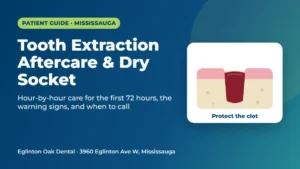
- Don’t use a straw, spit forcefully, or smoke — the suction can dislodge the clot and cause a painful “dry socket.”
- Don’t eat hard, crunchy, or very hot foods for a few days.
- Don’t poke the area with your tongue or fingers.
- Don’t do strenuous exercise for the first 2–3 days.
If you notice heavy bleeding that won’t stop, severe or worsening pain after day three, fever, or difficulty swallowing, contact us right away — these can be signs of infection or dry socket, both of which are easily treated when caught early.
Possible risks and complications
Wisdom tooth removal is very safe, but like any surgery it carries small risks. The most common is dry socket, where the protective blood clot is lost too early, exposing bone and causing throbbing pain a few days later. It’s uncomfortable but treatable, and easy to avoid by following aftercare instructions (especially no straws or smoking). Less commonly, patients may experience infection, prolonged swelling, or temporary numbness. Choosing an experienced dental team and following your post-op guidance keeps these risks to a minimum.
Is wisdom tooth removal covered by insurance or the CDCP?
Many Canadian dental and extended health plans cover a portion of wisdom tooth removal, since it’s often considered medically necessary rather than cosmetic. Coverage varies, so it’s worth checking your plan’s annual maximum and whether surgical extractions and sedation are included. If you’re approved under the Canadian Dental Care Plan (CDCP), extractions may be covered depending on your eligibility and the plan’s rules. Our team is happy to review your benefits, explain what’s covered, and submit your claim so you get the most from your coverage.
Why choose Eglinton Oak Dental for wisdom tooth removal in Mississauga?
At Eglinton Oak Dental, we combine gentle, experienced care with honest, upfront pricing. Dr. Sahil Gagnani and our team perform wisdom tooth removal right here in Mississauga — no need for a separate referral in most cases — using modern techniques and comfortable sedation options. Our 4.9-star rating from 408 patients reflects the calm, reassuring experience we aim to provide. From your first consultation to your final check-up, we’ll make sure you understand every step and feel supported throughout your recovery.
Types of wisdom tooth impaction
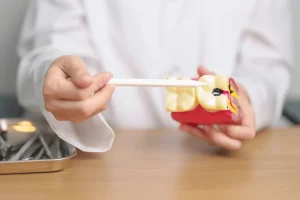
“Impacted” means the tooth cannot fully erupt through the gum. Which way it is angled
decides how straightforward wisdom teeth removal is, and it is the single biggest factor in your
quote:
- Mesial impaction — angled forward toward the front of the mouth. The most common type.
- Vertical impaction — upright but stuck below the gum.
- Distal impaction — angled backward, toward the rear of the jaw.
- Horizontal impaction — lying on its side against the neighbouring molar, usually the most complex to remove.
What happens if you skip wisdom teeth removal when there is a problem?
Leaving troublesome wisdom teeth in place can lead to repeated infections (pericoronitis), decay in
the wisdom tooth or the molar next to it, gum disease, crowding, and in some cases cysts that damage
the jaw. Removing them before serious problems develop is usually simpler, more comfortable and less
costly than waiting until there is pain or infection.
Is there a best age for wisdom teeth removal?
Wisdom teeth removal is often easier in the late teens and early twenties, when the roots are not
fully formed and the bone is more flexible, which tends to mean a smoother recovery. That said, they
can be safely removed at any age when there is a problem. An exam and X-ray is the only way to assess
your specific situation.
Dry socket: signs and prevention
Dry socket happens when the protective blood clot is lost too early, exposing bone and nerve
endings. The signs are a throbbing pain that starts a few days after surgery, often radiating to the
ear, along with a bad taste or odour. Prevent it by avoiding straws, smoking and vigorous rinsing in
the first few days. If you think you have dry socket, call us — it is easily treated and we can
make you comfortable quickly. Our dry socket and extraction aftercare guide shows how to tell normal healing from a dry socket, day by day.
Managing pain and swelling at home
Some swelling and discomfort after wisdom teeth removal is normal and peaks around day two to
three. Use a cold compress on
your cheek in 20-minute intervals for the first 24 to 36 hours, then switch to gentle warmth if
stiffness lingers. Take any prescribed or recommended pain relief on schedule rather than waiting for
pain to build. Rest with your head slightly elevated, and avoid bending, heavy lifting or strenuous
activity, which can increase throbbing and bleeding.
Soft food ideas for recovery
Eating well after wisdom teeth removal helps you heal, but stick to soft, cool, easy-to-chew food
for the first few days. Good options include yogurt, smoothies eaten with a spoon (never a straw), applesauce,
mashed potatoes, scrambled eggs, cooled oatmeal, blended soups served lukewarm rather than hot,
cottage cheese and well-cooked pasta. Add firmer food gradually as you feel comfortable, and avoid
anything crunchy, spicy or chewy, or with small seeds and grains that could lodge in the socket.
Caring for the area as it heals
After the first 24 hours, rinse gently with warm salt water several times a day, especially after
meals, to keep the socket clean. Brush your other teeth as normal but be gentle near the extraction
site. Stay hydrated, avoid smoking and alcohol while healing, and keep any follow-up appointment so
we can confirm everything is healing as it should.
Returning to work, school and exercise
Most people take it easy for the first day or two after wisdom teeth removal and return to work or
school within three to five days, depending on how they feel and how physical their day is. Light activity is fine once
bleeding has stopped, but hold off on intense exercise, sport and heavy lifting for about a week to
protect the healing site. Listen to your body — if something increases pain or bleeding, ease
off and give yourself more time.
When to call us after surgery
Most recoveries are smooth, but contact us if you notice bleeding that does not slow with gentle
pressure after a few hours, severe or worsening pain after day three (a possible sign of dry socket),
increasing swelling, fever, pus or a bad taste, numbness that does not fade, or difficulty swallowing
or breathing — seek urgent care for that last one. A quick call lets us reassure you or get you
seen promptly. See our emergency dentist page
for after-hours guidance.
Preparing for your wisdom teeth consultation
Your first visit is about getting answers. We take an X-ray, or a 3D scan for complex cases, to see
exactly how your wisdom teeth are positioned, examine the area, and discuss whether removal is
recommended now or whether we can monitor them. We also review your medical history, talk through
sedation and comfort options, and give you a clear written estimate. Come with your questions
— about recovery time, cost, or anything that is worrying you — and you will leave
knowing exactly what to expect.
The long-term benefits of timely removal
When wisdom teeth are causing problems, removing them at the right time protects the rest of your
smile. It prevents damage and decay in the neighbouring molars, stops repeated infections, relieves
crowding pressure, and avoids the more difficult surgery and longer recovery that can follow waiting
until the roots are fully formed or complications develop. For many patients, timely wisdom teeth
removal is a one-time procedure that spares them years of recurring discomfort.
Frequently asked questions about wisdom tooth removal
How long does it take to recover from wisdom tooth removal?
Most people feel significantly better within 3 to 5 days, and take 1 to 3 days off work or school. Full healing of the socket continues over the following few weeks. Following aftercare instructions closely gives you the fastest, smoothest recovery.
What can I eat after wisdom tooth removal?
Stick to soft, cool foods for the first few days — yogurt, smoothies eaten with a spoon, soup, mashed potatoes, scrambled eggs, and oatmeal. Avoid hard, crunchy, spicy, or very hot foods, and don’t use a straw. Gradually return to normal foods as you feel comfortable.
Is wisdom tooth removal painful?
You won’t feel pain during the procedure because the area is fully numb. Afterward, mild to moderate soreness is normal and is usually well managed with pain relief. Most patients find it far more comfortable than they expected.
Do I need all four wisdom teeth removed at once?
Not always. Some patients only need one or two removed, while others benefit from removing all four in a single visit to avoid multiple recoveries. We’ll recommend the best approach for your situation at your consultation.
How much does wisdom tooth removal cost in Mississauga?
It typically ranges from about $150 for a simple extraction to $900 for a complex impacted tooth, with all four often costing $1,000–$3,000 depending on complexity and sedation. Book a consultation by calling 905-607-1112 for an exact, written quote and your insurance options.
Does OHIP cover wisdom teeth removal?
OHIP generally does not cover wisdom tooth removal done in a dental office. It only covers certain dental surgery performed in a hospital when it is medically necessary. Private dental insurance and the Canadian Dental Care Plan often cover a large share of wisdom tooth removal.
How much does it cost to remove all four wisdom teeth?
Wisdom tooth removal typically costs about $200 to $600 per tooth, so all four teeth together often come to roughly $800 to $2,400, plus sedation if you choose it. We give you an exact quote after X-rays.
When can I go back to work or school after wisdom tooth removal?
Many people return to work or school within one to three days, depending on how many teeth were removed and whether sedation was used. Avoid heavy exercise for a few days.
How do I know if my wisdom tooth is infected?
Signs include pain and swelling at the back of the mouth, a bad taste or smell, pus, difficulty opening your mouth and sometimes fever. Call 905-607-1112 promptly if you notice these signs.
Can a wisdom tooth be removed at an emergency visit?
Often, yes. If the tooth is causing pain and it is safe to remove, it can usually be taken out at an urgent appointment. If there is a lot of swelling, we may treat the infection first.
Sources & Further Reading
What is dry socket and how do I avoid it?
Dry socket is painful exposure of the socket when the blood clot is lost too early. Avoid straws,
smoking and forceful rinsing for the first few days. If you get a throbbing ache a few days after
surgery, call us — it is easily treated.
Do all wisdom teeth need to be removed?
No. Healthy wisdom teeth that come in straight and can be cleaned properly may not need removal. We
recommend extraction when they are impacted or causing pain, crowding, decay or infection. An X-ray
tells us for certain.