Sedation Dentistry in Mississauga: Options, Cost & What to Expect (2026 Guide)
Roughly one in three adults avoids or delays dental care because of anxiety or fear — and for many, that avoidance leads to bigger, more painful, and more expensive problems down the road. Sedation dentistry Mississauga patients can rely on takes the edge off treatment for nervous patients, complex procedures, or anyone who simply wants a calmer, faster-feeling appointment. This guide covers the different levels of sedation available, what each feels like, how much it costs, and how to know which option is right for you.
At Eglinton Oak Dental, we offer nitrous oxide and oral sedation options for anxious patients and longer procedures — call 905-607-1112 to discuss what would work best for you.
Nervous About Dental Visits? We Can Help
Rated 4.8★ by 320+ Mississauga patients, many of whom came to us specifically because of dental anxiety. Fill in the form below and we’ll call you back, or call 905-607-1112 to talk through your options.
What is sedation dentistry?
Sedation dentistry uses medication to help patients relax during dental treatment, ranging from a light, barely-noticeable calm to a deeper, drowsy state where time seems to pass quickly. It’s important to understand that most forms of sedation used in general dentistry are not the same as general anesthesia (being fully unconscious) — you typically remain conscious and able to respond, but significantly more relaxed and less aware of the sounds, sensations, and passage of time that often trigger anxiety. Local anesthetic (the numbing injection) is still used alongside sedation to ensure the treatment area itself is pain-free.
Sedation dentistry Mississauga patients choose it for a range of reasons beyond fear alone — a strong gag reflex, difficulty sitting still for long procedures, sensory sensitivities, or simply wanting multiple treatments completed in fewer visits with less perceived time in the chair.
Who benefits most from sedation dentistry?
While anyone can request sedation for their comfort, certain patients tend to benefit the most:
- Patients with dental anxiety or phobia, including those who have avoided the dentist for years because of fear
- Patients with a strong gag reflex that makes X-rays, impressions, or back-tooth work difficult
- Patients needing lengthy or complex procedures, such as multiple implants, several wisdom teeth at once, or extensive restorative work
- Patients with limited mobility or difficulty sitting still for medical or neurodivergence-related reasons
- Patients with a low pain threshold or heightened sensitivity to dental sounds, smells, or sensations
- Patients who had a traumatic dental experience in the past and want a calmer alternative
Types of sedation dentistry available
Not every patient needs the same level of sedation, and matching the right option to your specific anxiety level and procedure matters. Here are the main types offered in general dental practice:
Nitrous oxide (laughing gas)
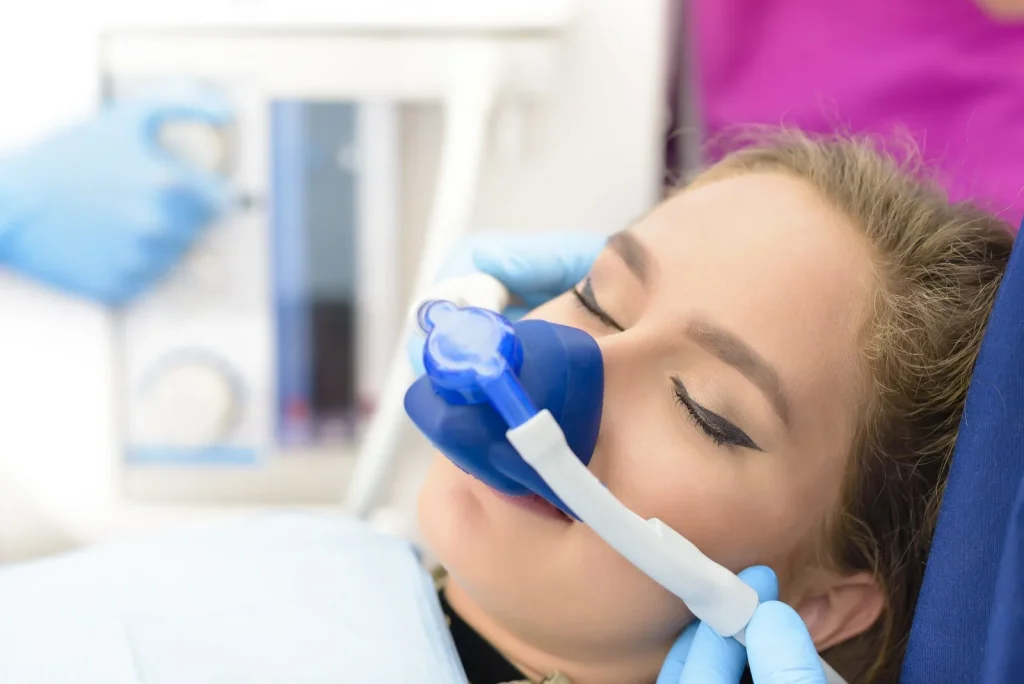
Nitrous oxide is inhaled through a small nasal mask throughout the procedure and produces a light, pleasant, floating feeling within minutes. It’s the mildest form of sedation, wears off almost immediately once the mask is removed (you can safely drive yourself home afterward), and is adjustable in real time — we can increase or decrease the dose during your appointment based on how you’re feeling. It’s an excellent starting option for mild-to-moderate anxiety and is also commonly used for children.
Oral conscious sedation
Oral sedation involves taking a prescribed pill (typically in the benzodiazepine family) before your appointment, producing a deeper, drowsier relaxation than nitrous oxide. Most patients remain able to respond to questions and instructions, but many have little to no memory of the procedure afterward — a significant benefit for anyone whose anxiety is centered on the experience of “being aware” during treatment. Because the drowsiness lingers for several hours, you’ll need a friend or family member to drive you home and ideally stay with you for the rest of the day.
IV sedation
IV (intravenous) sedation delivers medication directly into the bloodstream, allowing for a deeper, more precisely controlled level of relaxation than oral sedation, with effects starting almost immediately. This option is typically reserved for more involved oral surgery, complex implant cases, or patients with severe dental phobia, and is usually administered by, or in coordination with, a dentist or oral surgeon with specific sedation training/certification. As with oral sedation, you’ll need someone to drive you home afterward.
General anesthesia
Full general anesthesia (complete unconsciousness) is reserved for extensive oral surgery, certain pediatric cases, or patients with severe special needs, and is usually performed in a hospital or specialized surgical setting rather than a routine dental office visit.
Is sedation dentistry safe?
Yes — sedation dentistry has an excellent safety record when administered by trained providers who properly screen your medical history beforehand. Before recommending any sedation option, we review your full medical history, current medications, allergies, and any prior reactions to sedation or anesthesia. Vital signs (heart rate, blood pressure, oxygen saturation) are monitored throughout sedation procedures, and dosing is tailored to your weight, age, and health status. If you have significant medical conditions, we may recommend a medical clearance from your physician or a referral to a specialist setting for deeper sedation options.
How much does sedation dentistry cost in Mississauga?
Sedation cost varies significantly by type, and is typically charged in addition to the cost of the dental procedure itself. As a general 2026 guide:
- Nitrous oxide (per visit): roughly $40 – $75
- Oral conscious sedation: roughly $150 – $300, depending on dosage and monitoring time
- IV sedation: roughly $400 – $800+, depending on procedure length and provider
These figures are separate from the cost of the dental treatment being performed under sedation. We always provide a combined written estimate covering both the procedure and the sedation option you choose, so there are no surprises.
Is sedation dentistry covered by insurance?
Coverage for sedation varies considerably between insurance plans. Nitrous oxide is covered by many plans, particularly for younger patients or specific procedures, while oral and IV sedation are covered less consistently and often only for medically necessary situations (such as extensive oral surgery) rather than anxiety management alone. We recommend checking your specific plan details or letting us submit a predetermination before your appointment so you know your exact out-of-pocket cost. The Canadian Dental Care Plan (CDCP) has more limited sedation coverage; we’re happy to walk you through what applies to your situation.
What to expect on the day of your sedated appointment
Preparation depends on which type of sedation you’re having:
- Nitrous oxide: no special preparation needed — eat normally beforehand and you can drive yourself home afterward
- Oral sedation: you’ll typically take the prescribed pill at home 30–60 minutes before your appointment (per our instructions), so you must arrange a ride to and from the clinic and should not drive for the rest of the day
- IV sedation: you’ll usually need to avoid food and drink for several hours beforehand (we’ll give you exact fasting instructions), and definitely need a ride home and someone to stay with you afterward
For all but nitrous oxide, plan to take it easy for the rest of the day — avoid operating machinery, signing important documents, or making major decisions until the medication has fully cleared your system, typically by the next morning.
Sedation dentistry for children
Nitrous oxide is commonly and safely used for children who are anxious about a specific procedure or who have difficulty sitting still, and its quick recovery time means kids are back to normal almost immediately after the mask comes off. Deeper sedation for children is reserved for more extensive treatment needs or significant anxiety and is approached carefully, with thorough medical history review and monitoring throughout. See our pediatric dentistry page for more on how we support young or anxious patients.
Common procedures where sedation is used
- Wisdom tooth extraction, especially multiple teeth at once
- Dental implant placement
- Root canal treatment for anxious patients
- Extensive restorative work requiring multiple crowns or fillings in one visit
- Routine cleanings and exams for patients with severe dental phobia who would otherwise avoid care entirely
Tips for choosing the right sedation option
The right choice depends on your anxiety level, the procedure’s length and complexity, and your personal preference around memory of the visit. As a general guide: mild nervousness about a routine procedure is usually well-served by nitrous oxide; moderate-to-severe anxiety, or wanting little to no memory of the visit, often points toward oral sedation; and complex oral surgery, multiple procedures in one sitting, or severe phobia are the situations where IV sedation is most often considered. We’ll talk through your specific concerns at a consultation and recommend the lightest option that will actually get you comfortably through treatment — there’s no need to over-sedate for a routine cleaning.
Overcoming dental anxiety without sedation
Sedation isn’t the only tool for managing dental anxiety, and some patients prefer to try other approaches first or alongside light sedation:
- Clear, upfront communication about exactly what will happen at each step before it happens
- Signal systems, like raising a hand, to pause treatment at any point
- Noise-cancelling headphones or music to block out drill sounds
- Shorter, split appointments rather than one long session
- Bringing a support person to sit with you in the treatment room where possible
Simply telling our team upfront that you’re anxious changes how we approach your entire visit — from pacing to how much explanation we give before each step — even if you decide against any form of sedation.
What sedation dentistry won’t do
It’s worth setting realistic expectations: sedation reduces anxiety and awareness of the procedure, but it does not replace local anesthesia for pain control — you’ll still be numbed at the treatment site regardless of which sedation option you choose. Sedation also doesn’t shorten the actual procedure time (with the partial exception of allowing more work to be comfortably completed in one visit) — a two-hour procedure is still a two-hour procedure, it will simply feel shorter and less stressful to you.
Aftercare following sedation
- Arrange a ride home in advance for any sedation beyond nitrous oxide — we cannot let you drive yourself
- Have a light meal ready at home, since eating a large meal immediately isn’t advised
- Rest for the remainder of the day; avoid important decisions, driving, or operating machinery
- Follow any procedure-specific aftercare instructions (for example, after wisdom tooth removal or implant placement)
- Contact us if you experience any unusual or prolonged grogginess, nausea, or other symptoms after sedation wears off
Serving Mississauga, Erin Mills, Churchill Meadows, Streetsville & Meadowvale
Eglinton Oak Dental offers sedation dentistry to anxious and complex-case patients across Mississauga, including Erin Mills, Central Erin Mills, Churchill Meadows, Streetsville, and Meadowvale. Our Eglinton Ave W clinic is experienced at helping long-time avoiders of dental care get back on track comfortably.
Why Choose Eglinton Oak Dental for Sedation Dentistry
If dental anxiety has kept you away from the dentist, you’re far from alone — and it’s exactly the kind of situation sedation dentistry Mississauga patients rely on us for was designed to solve. Our team takes the time to understand your specific fears, explain every option clearly, and recommend the lightest approach that will get you comfortably through treatment. Rated 4.8★ by more than 320 patients, we welcome anxious and long-avoiding patients with zero judgment. Call 905-607-1112 to talk through your options.
Frequently asked questions about sedation dentistry in Mississauga
Is sedation dentistry safe?
Yes, when administered by trained providers who screen your medical history and monitor you throughout the procedure. Sedation dentistry has an excellent safety record in general dental practice.
How much does sedation dentistry cost?
Nitrous oxide typically costs $40–$75 per visit, oral sedation $150–$300, and IV sedation $400–$800 or more, in addition to the cost of the dental procedure itself.
Will I be unconscious during sedation dentistry?
No, most sedation used in general dentistry (nitrous oxide, oral, and IV sedation) keeps you conscious and able to respond, just significantly more relaxed. Full unconsciousness requires general anesthesia, typically in a hospital setting.
Can I drive myself home after sedation dentistry?
You can drive yourself after nitrous oxide only. Oral and IV sedation require a ride home, since drowsiness lingers for several hours.
Is sedation dentistry covered by insurance?
Coverage varies by plan; nitrous oxide is covered more often than oral or IV sedation, which are typically only covered for medically necessary procedures.
Is sedation dentistry safe for children?
Nitrous oxide is commonly and safely used for anxious or fidgety children, with a quick recovery time once the mask is removed.
Does sedation replace the numbing injection?
No, local anesthesia is still used at the treatment site regardless of sedation type. Sedation reduces anxiety and awareness, not the need for pain-blocking anesthetic.
What if I’ve avoided the dentist for years because of anxiety?
This is exactly the situation sedation dentistry is designed for. Tell us upfront and we’ll build a plan, sedation or otherwise, that gets you comfortably back on track.