Bad Breath Treatment in Mississauga: Causes, Fixes & When to See a Dentist (2026 Guide)
If mouthwash and mints only mask the problem for an hour, persistent bad breath (the clinical term is halitosis) almost always has a real, findable cause — and in the large majority of cases, that cause is something happening in your mouth, not a mystery. This guide walks through what actually causes chronic bad breath, which fixes genuinely work versus which ones just cover it up, and exactly when it’s worth booking a dental exam instead of trying another product off the shelf.
Medically reviewed by Dr. Sahil Gagnani, DMD (McGill University), MDS (AIIMS) — general dentist at Eglinton Oak Dental, Mississauga. Last updated 2026.
Tired of Guessing What’s Causing It?
A short exam usually finds the exact source of persistent bad breath — and a clear, honest plan to fix it. Call 905-607-1112 or fill in the quick form below.
What Actually Causes Bad Breath?
Roughly 85–90% of chronic bad breath starts in the mouth, not the stomach — despite how often people assume it’s a digestive issue. The smell comes from volatile sulfur compounds produced by bacteria as they break down food particles, dead cells, and proteins on the tongue, between teeth, and below the gumline. The rest usually traces back to the nose, throat, sinuses, or occasionally a medical condition elsewhere in the body.
Dental (Oral) Causes — the Majority of Cases
| Cause | Why It Smells |
|---|---|
| Tongue coating | The back of the tongue traps far more odour-causing bacteria than any other surface in the mouth — the single most common source |
| Gum disease (gingivitis/periodontitis) | Bacteria below the gumline produce a distinct, persistent odour that brushing alone can’t reach |
| Dry mouth (xerostomia) | Saliva normally washes away bacteria and food debris; without enough of it, odour-causing bacteria build up faster |
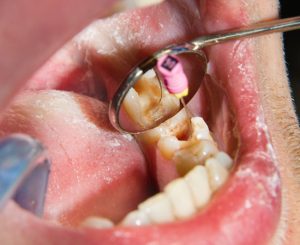
| Cavities and old, leaking fillings | Decay traps food and bacteria in spots a toothbrush can’t clean |
| Poorly fitting dentures | Food debris and bacteria accumulate in and under an ill-fitting appliance |
| Tonsil stones | Small calcified debris that forms in tonsil crevices and can smell strongly out of proportion to their size |
Non-Dental Causes Worth Knowing
If a dental exam rules out the causes above and breath is still persistently off, a few other sources are worth considering — we’ll flag these and suggest seeing your family doctor rather than guessing:
- Sinus infections and post-nasal drip — mucus draining down the back of the throat feeds odour-causing bacteria there
- Tonsillitis or chronic throat infections
- Acid reflux (GERD) — stomach acid or partially digested food can carry a distinct sour odour
- Uncontrolled diabetes — can produce a sweet, fruity-smelling breath (ketones) that needs medical attention, not a mint
- Certain medications — many common prescriptions reduce saliva flow as a side effect
- Smoking and vaping — dries the mouth and leaves its own persistent odour independent of oral hygiene
A dentist can confidently rule the mouth in or out as the source in one visit; if everything in the mouth looks and smells clean and the odour persists, that’s a genuine signal to loop in your physician rather than keep trying oral products.
How We Diagnose the Cause at Eglinton Oak Dental
Bad breath is diagnosed by process of elimination, not guesswork:
1. A full exam and gum assessment
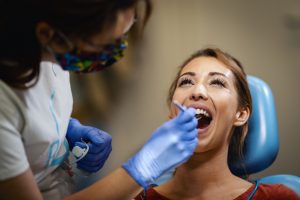
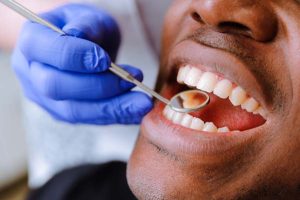
We check for cavities, leaking or fractured old fillings, and measure gum pocket depths — deep pockets are one of the strongest indicators that periodontitis is the source.
2. Tongue and soft-tissue check
A visibly coated tongue, especially toward the back, is often enough on its own to explain persistent odour.
3. A few direct questions
When the smell is worse (morning vs. after meals), whether your mouth feels dry, any recent sinus or reflux symptoms, and current medications — these narrow down oral versus non-oral causes quickly.
4. Treating the most likely cause first
Rather than throwing every possible fix at the problem at once, we treat the most probable dental cause first (for example, a cleaning plus tongue care) and reassess — if breath doesn’t improve after the mouth is genuinely clean and healthy, that’s the clearest sign to look beyond the mouth.
Treatment Options That Actually Work
Professional cleaning
A routine cleaning removes surface plaque and tartar that a toothbrush misses, especially between teeth.
Deep cleaning, if gum disease is present
When pocket depths show periodontitis rather than simple gingivitis, scaling and root planing (deep cleaning) removes the below-the-gumline bacteria that a regular cleaning can’t reach — and this is very often the single biggest breath improvement patients notice. See our full gum disease symptoms & cost guide for the details.
Tongue scraping (in-office guidance + daily habit)
Because the tongue is the single most common source, we’ll show you correct tongue-scraping technique — a soft-bristle brush alone typically only reaches a fraction of the bacteria a dedicated tongue scraper removes.
Treating cavities and replacing failing fillings or crowns
Sealing off spots where bacteria and food debris get trapped removes an ongoing odour source, not just a temporary one.
Denture cleaning and refitting
Dentures need their own daily cleaning routine separate from natural teeth; a poor fit that traps food is a fixable, mechanical cause.
Dry mouth management
Depending on the cause, this can mean adjusting timing of a medication with your physician, using a saliva substitute or xylitol products, and staying consistently hydrated through the day.
Referral when needed
If everything dental checks out clean, we’ll say so plainly and suggest seeing your physician (for sinus, reflux, or systemic causes) or an ENT for tonsil-related causes — rather than continuing to treat a mouth that isn’t the source.
At-Home Habits That Make a Real Difference
- Brush twice daily and floss once a day — food trapped between teeth is a common, easily fixed cause
- Scrape your tongue, especially the back third, every morning
- Stay hydrated through the day, not just at meals, to keep saliva flow up
- Cut back on tobacco and vaping — both dry the mouth and add their own odour independent of hygiene
- Limit sugary and very acidic foods/drinks that feed odour-causing bacteria and erode enamel over time
- Replace your toothbrush every 3–4 months, since a worn brush cleans less effectively
- Chew sugar-free (xylitol) gum between meals if your mouth tends to run dry
Does Mouthwash Actually Fix Bad Breath?
Most over-the-counter mouthwashes only mask odour for an hour or two — they don’t address tartar below the gumline, a coated tongue, or a cavity. An antimicrobial (not just cosmetic-mint) mouthwash can help as a supporting step once the underlying cause is actually being treated, but it’s not a standalone fix for chronic, recurring bad breath. If a mouthwash is the only thing keeping your breath under control day to day, that’s a sign it’s time for an exam rather than a stronger rinse.
Common Myths About Bad Breath, Debunked
“It’s always something you ate.”
Food-related breath (garlic, coffee, onions) is temporary and clears within hours once the food residue and its byproducts leave your system. If breath is bad every day regardless of what you eat, that points to an ongoing oral or medical cause, not your last meal.
“Bad breath means bad hygiene.”
Not necessarily — dry mouth from medication, gum disease that developed despite decent brushing, or a sinus issue can all cause persistent odour in someone with an otherwise careful routine.
“Stronger mouthwash is the fix.”
Masking odour isn’t the same as removing its source. If the cause is below the gumline or on the back of the tongue, a stronger mint flavour won’t reach it.
“It always comes from the stomach.”
This is one of the most common misconceptions — true digestive-origin bad breath is uncommon. The large majority of cases trace back to the mouth.
When to See a Dentist for Bad Breath
Book an exam if:
- Bad breath persists day after day despite normal brushing, flossing, and mouthwash use
- You notice bleeding gums, gum recession, or teeth that feel slightly loose alongside the odour
- It’s been more than 6 months since your last cleaning and checkup
- You have a dry mouth most of the day, or take medication known to cause it
- Family or a partner has mentioned it more than once — people are often the last to notice their own breath
Is Bad Breath Treatment Covered by Insurance or the CDCP?
Bad breath itself isn’t billed as its own procedure — the diagnostic exam is typically part of a standard checkup, and any treatment needed (a cleaning, deep cleaning for gum disease, or a filling) is billed and covered the normal way under your dental insurance or the Canadian Dental Care Plan (CDCP) if you’re eligible. We’re a CDCP-participating practice and can confirm your coverage before any treatment begins.
What to Expect at Eglinton Oak Dental
We start with a straightforward exam to actually find the cause rather than recommending a generic fix — you’ll know exactly what’s behind it before we suggest any treatment, and what it costs after insurance or CDCP. If your mouth checks out clean and healthy, we’ll tell you that too, and point you toward the right next step rather than treating a mouth that isn’t the source.
Frequently Asked Questions About Bad Breath
What is the main cause of bad breath?
In most people, chronic bad breath comes from bacteria on the back of the tongue or below the gumline in cases of gum disease — roughly 85 to 90 percent of cases trace back to the mouth rather than the stomach or another part of the body.
How do I get rid of bad breath permanently?
Treat the actual source: a professional cleaning (or deep cleaning if gum disease is present), consistent tongue scraping, and addressing any dry mouth or untreated cavities. Mouthwash and mints only mask odour temporarily and don’t fix an underlying cause.
Can bad breath be a sign of gum disease?
Yes — persistent bad breath, especially alongside bleeding or swollen gums, is one of the more common early signs of gum disease and is worth a dental exam rather than waiting it out.
Why does my breath smell bad even after brushing?
Brushing alone often misses the back of the tongue and the area below the gumline, which are the two most common sources of chronic bad breath. It can also mean there’s an untreated cavity, a leaking old filling, or dry mouth involved.
Is bad breath always caused by something in the mouth?
No, though it’s the most common source. Sinus infections, acid reflux, tonsil stones, certain medications, and less commonly uncontrolled diabetes can also cause persistent bad breath.
Does scraping your tongue really help with bad breath?
Yes — the back of the tongue traps more odour-causing bacteria than almost any other surface in the mouth, and a toothbrush alone typically doesn’t remove it as effectively as a dedicated tongue scraper.
Can dry mouth cause bad breath?
Yes. Saliva naturally washes away food debris and bacteria; when saliva flow is reduced by medication, dehydration, or breathing through the mouth, odour-causing bacteria build up faster.
Is mouthwash enough to fix bad breath?
Most mouthwash only masks odour for an hour or two rather than treating its cause. It can support treatment once the underlying issue (like gum disease or a cavity) is addressed, but it isn’t a standalone fix for chronic bad breath.
When should I see a dentist about bad breath?
If it persists day after day despite normal brushing and flossing, if you notice bleeding or receding gums alongside it, or if it’s been more than 6 months since your last checkup, it’s worth booking an exam.
Can bad breath be a sign of a cavity?
Yes — decay traps food particles and bacteria in spots a toothbrush can’t reach, which can produce a persistent, localized odour until the cavity is treated.
Does bad breath treatment cost extra at the dentist?
There’s usually no separate charge just for diagnosing the cause, since it’s part of a standard exam. Any treatment needed, such as a cleaning or deep cleaning, is billed the normal way and can be covered by insurance or the CDCP.
Can dentures cause bad breath?
Yes, if they don’t fit well or aren’t cleaned daily, food debris and bacteria can build up in and under the appliance. A refit and a proper daily cleaning routine usually resolves it.
Why is my breath worse in the morning?
Saliva flow drops significantly during sleep, letting odour-causing bacteria multiply overnight. This is normal and usually clears quickly after your morning brushing and a glass of water.
Can bad breath come back after treatment?
It can, if the habits that caused it (inconsistent brushing and flossing, skipping tongue care, ongoing dry mouth, smoking) return. Sticking with regular cleanings and daily home care is what keeps it from recurring.
Is chronic bad breath ever a sign of a serious medical condition?
Occasionally — a sweet, fruity breath odour can signal uncontrolled diabetes, and a persistently sour smell can point to acid reflux. These are uncommon compared to dental causes, but worth mentioning to your physician if a dental exam rules out the mouth as the source.