TMJ & Jaw Pain Treatment in Mississauga
Clicking or popping when you chew, morning jaw soreness, or headaches that seem to start near your ears are all common signs of a TMJ disorder (TMD) — a problem with the jaw joint that’s far more treatable than most people realize.
If jaw pain has been affecting your eating, sleeping, or daily comfort, TMJ treatment Mississauga patients trust can bring real, lasting relief without surgery in most cases. At Eglinton Oak Dental, we assess and treat TMJ disorders as part of comprehensive dental care.
The Problem
What is TMJ disorder (TMD)?
The temporomandibular joint (TMJ) is the hinge connecting your jawbone to your skull, located just in front of each ear. TMJ disorder, often shortened to TMD, refers to a range of problems affecting this joint and the muscles that control jaw movement — anything from muscle tension and joint inflammation to disc displacement inside the joint itself. Because the TMJ is involved in every bite, chew, and word you speak, even a minor issue here can cause noticeable, day-to-day discomfort.
Symptoms
Common signs of TMJ disorder
Jaw Pain & Soreness
Especially in the morning or after chewing, often centered around the jaw joint itself.
Clicking or Popping
Sounds when opening or closing your mouth, sometimes with a locking sensation.
Headaches & Earaches
Pain that doesn’t seem to have another obvious cause, often mistaken for tension headaches.
Limited Jaw Movement
Jaw locking or a restricted range of motion when opening wide.
Facial Tenderness
Soreness around the jaw muscles and temples, sometimes spreading to the neck.
Uneven Bite
A bite that suddenly feels “off” or misaligned compared to before.
Symptoms can range from mild and occasional to persistent and disruptive, and they often overlap with other causes of head and neck pain — which is exactly why a proper dental assessment matters before assuming a symptom is “just a headache.”
Common causes of TMJ disorders
- Teeth grinding or clenching (bruxism), often happening unconsciously during sleep or stressful periods
- Jaw injury or trauma, from an impact, accident, or dental procedure
- Arthritis affecting the joint itself
- Misaligned bite that puts uneven pressure on the jaw joint
- Chronic stress leading to unconscious jaw clenching
- Poor posture from prolonged screen use, changing how jaw muscles engage
Often it’s a combination of factors rather than one single cause, which is why an accurate assessment — not guesswork — is the starting point for effective treatment.
Diagnosis
How we diagnose TMJ disorder
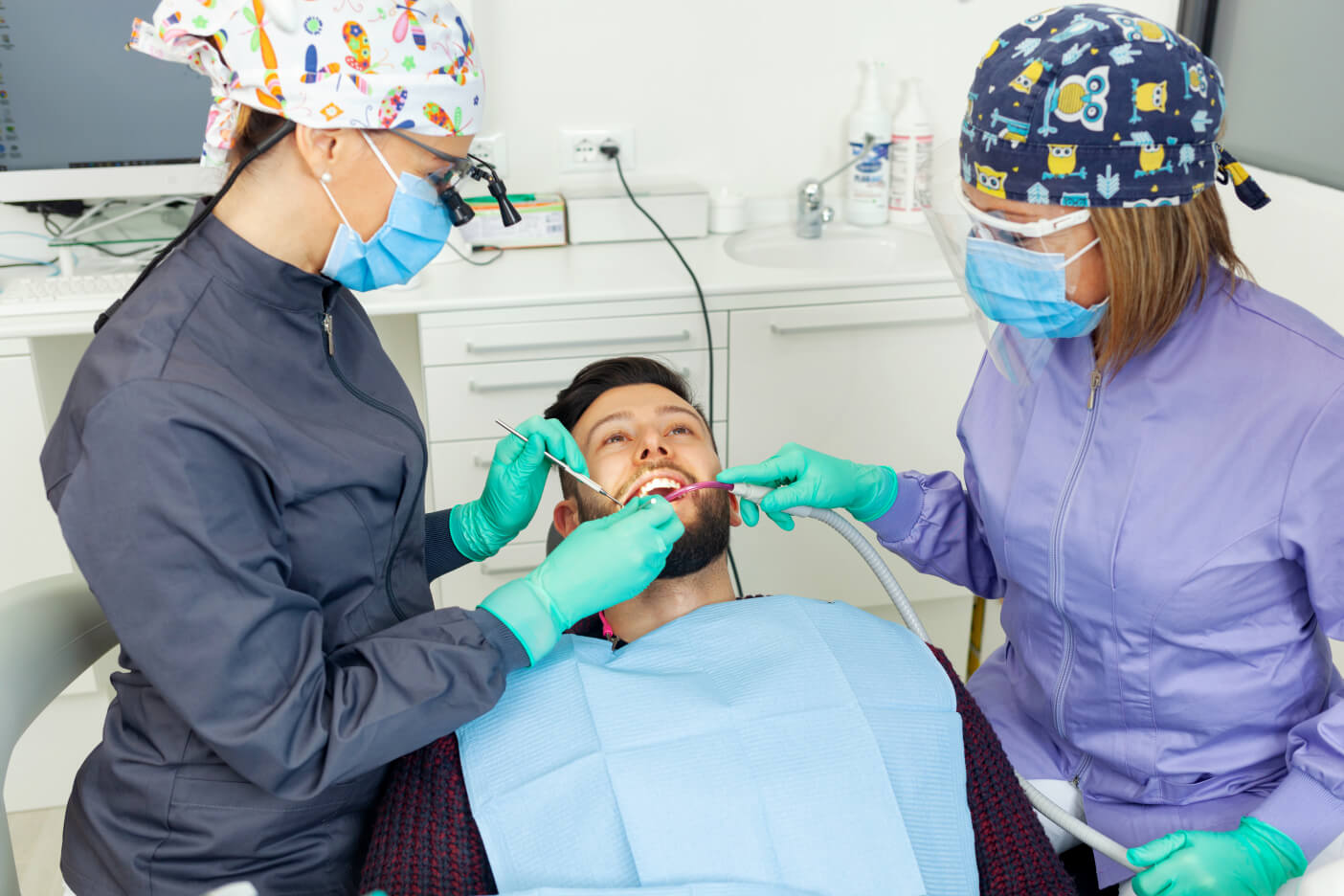
A TMJ assessment includes reviewing your symptoms and history, feeling and listening to the joint as you open and close your mouth, checking your bite alignment, and examining your teeth for wear patterns that suggest grinding or clenching. In some cases, we may take X-rays or refer for more detailed imaging if a deeper joint issue is suspected. This assessment lets us build a treatment plan matched to your specific cause, rather than a one-size-fits-all approach.
Dealing with Jaw Pain, Clicking, or Headaches?
Rated 4.8★ by 320+ Mississauga patients. Fill in the quick form below and we’ll call you back, or call 905-607-1112 to book a TMJ assessment.
Treatment
TMJ treatment options
Custom Night Guards / Occlusal Splints
A custom-fitted night guard is the most common first-line treatment for TMJ disorder caused by grinding or clenching. Worn while sleeping, it creates a slight separation between your upper and lower teeth, reducing muscle strain and protecting your teeth from further wear. Unlike store-bought guards, a custom-fitted appliance is shaped precisely to your bite for far better comfort and effectiveness.
Bite Adjustment
Minor adjustments to specific teeth (or restorative work) redistribute pressure more evenly across the jaw joint.
Physical Therapy & Exercises
Gentle stretching and strengthening exercises reduce muscle tension and improve range of motion.
Stress & Habit Management
Addressing daytime clenching habits and stress is key to long-term relief for many patients.
Medication
Over-the-counter anti-inflammatories help manage pain during flare-ups; a muscle relaxant may be prescribed short-term.
The large majority of TMJ cases respond well to the conservative treatments above. In rarer, more severe cases involving structural joint damage, we’ll refer you to an oral and maxillofacial specialist for further evaluation.
Investment
How much does TMJ treatment cost in Mississauga?
We always provide a written estimate after your assessment, so you know the full cost of your specific treatment plan before proceeding. Coverage varies by insurance plan — many plans cover night guards and bite splints at least partially when documented as medically necessary for a diagnosed TMJ condition.
When to see a dentist for jaw pain
Book an assessment if you’re experiencing regular jaw pain or soreness, frequent clicking or popping, jaw locking or limited opening, unexplained headaches or earaches, or visible wear on your teeth that suggests grinding. Catching TMJ issues early prevents them from progressing into more disruptive, harder-to-treat problems.
Serving Mississauga, Erin Mills, Churchill Meadows, Streetsville & Meadowvale
Eglinton Oak Dental provides TMJ and jaw pain assessment and treatment to patients across Mississauga, including Erin Mills, Central Erin Mills, Churchill Meadows, Streetsville, and Meadowvale.
Why Choose Eglinton Oak Dental for TMJ Treatment
Jaw pain doesn’t have to be something you just live with. Our team takes the time to properly assess what’s actually causing your symptoms and builds a treatment plan around that specific cause, rather than reaching for a generic fix. Rated 4.8★ by more than 320 patients, we welcome new patients for a TMJ and jaw pain assessment. Call 905-607-1112 to book yours.
Frequently asked questions about TMJ treatment in Mississauga
What are the signs of TMJ disorder?
Common signs include jaw pain or soreness, clicking or popping when opening your mouth, jaw locking, headaches or earaches, and facial tenderness.
How much does TMJ treatment cost in Mississauga?
A TMJ assessment typically costs $100–$200, and a custom night guard or occlusal splint typically costs $400–$700.
Can a night guard treat TMJ disorder?
Yes, a custom-fitted night guard is the most common first-line treatment for TMJ disorder caused by teeth grinding or clenching.
Is TMJ treatment covered by insurance?
Many dental plans cover night guards and bite splints at least partially when medically necessary for a diagnosed TMJ condition. Coverage varies by plan.
Does stress cause TMJ disorder?
Stress is a common contributing factor, since it often leads to unconscious jaw clenching and teeth grinding, which strain the jaw joint over time.
Can TMJ disorder go away without treatment?
Mild, occasional symptoms sometimes resolve on their own, but persistent clicking, pain, or jaw locking typically need active treatment to prevent further damage.
Do I need surgery for TMJ disorder?
Most TMJ cases respond well to conservative treatment like night guards, bite adjustment, and physical therapy. Surgery is reserved for rarer, more severe structural cases.
Can TMJ disorder cause headaches?
Yes, TMJ disorder is a common, often overlooked cause of headaches and earaches, since the jaw muscles and joint are closely connected to the head and neck.
Sources & Further Reading
What Our Patients Say

Staff is very friendly and helpful. I highly recommend this office.



The reception staff were very welcoming, friendly, and efficient. The paperwork was completed quickly, which made the check-in process smooth and stress-free.
What impressed us the most was the paediatric dentist. She took the time to speak with our daughter, make her comfortable, and build her confidence before starting the treatment. Her patience and gentle approach made a big difference, especially since dental visits can be stressful for children.
The entire experience was excellent. The dentist also clearly explained the future course of action and what we should expect going forward.
We really appreciated the professional and caring service and would highly recommend Eglinton Oak Dental to families looking for a child-friendly dental practice.



thanks you Eglinton oak team for such a wonderful experience








Highly recommended


Overall, it was a fantastic experience, and I couldn't be happier with the care I received. I highly recommend this clinic to anyone looking for excellent dental care!


Excellent





Highly recommend

Dr. Sahil was very professional, kind, and made me feel comfortable throughout my visit.
Highly recommend this clinic for excellent dental care!

Great team work

My X-rays were taken smoothly, and Dr. Sahil explained everything in detail, which gave me a clear understanding of my dental condition and treatment plan. My cleaning and filling procedures were also very smooth and completely comfortable.
Overall, I had an excellent experience and highly recommend this clinic to anyone looking for quality dental care.






Sharon









The front desk staff were just as great, kind, organized, and very helpful in explaining how the billing works with insurance. They also made booking my follow-up appointments quick and easy.
Overall, a smooth and comfortable experience. I’d definitely recommend this clinic to anyone looking for quality dental care.

Dr. Sahil was extremely patient, gentle, and reassuring, which made my daughter feel comfortable and relaxed throughout the procedure. The staff was also very friendly, welcoming, and attentive, making sure everything went smoothly from start to finish.
I truly appreciate the professionalism, kindness, and excellent service provided by the whole team. It’s clear that they genuinely care about their patients. I would highly recommend Dr. Sahil and Eglinton Oak Dental to anyone looking for high-quality dental care for their family.

The clinic is modern, clean, and they use the latest equipment — the whole process was smooth and painless. My crown looks so natural, you honestly can’t tell it’s not my real tooth! Highly recommend this place if you’re looking for professional, caring, and detail-oriented dental care.