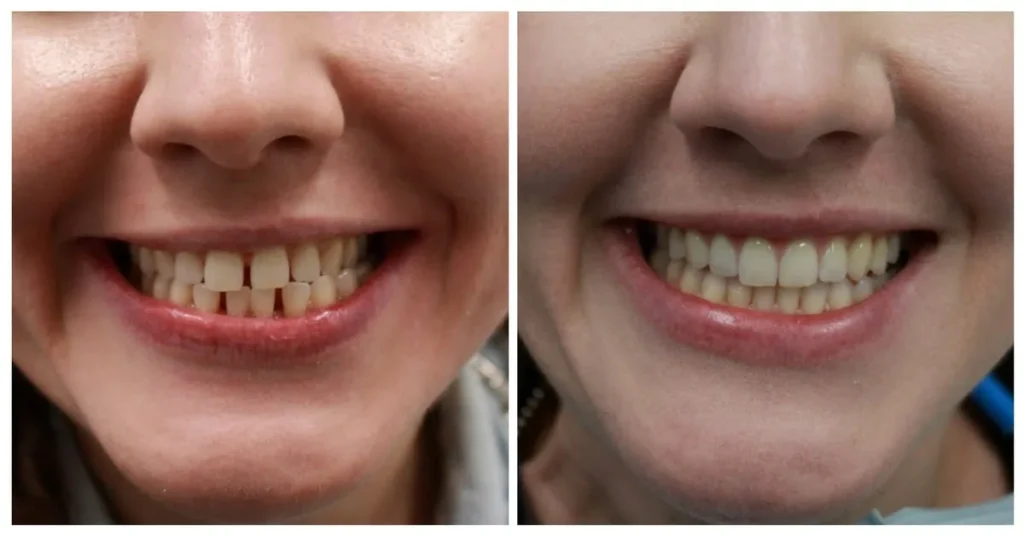
Invisalign vs Braces Cost: Which Is Cheaper in 2026? (Complete Mississauga & Canada Guide)
If you’re comparing Invisalign vs braces cost before booking a consultation, here’s the short version: traditional metal braces usually cost less upfront ($3,000–$7,500 CAD), while Invisalign runs a little higher ($3,500–$8,000 CAD) but often saves money over time through fewer emergency visits and no broken-bracket repairs. The right answer for you depends on your case complexity, your insurance plan, and how you want treatment to fit your lifestyle — and that’s exactly what this guide breaks down, using real 2026 Mississauga pricing. Below, we cover the full invisalign vs braces cost picture: itemized pricing, insurance and CDCP coverage, monthly payment plans, and real patient cost examples.
Book Your Free Invisalign or Braces Consultation
Mississauga’s trusted family & cosmetic dentist — rated 4.8★ by 322 patients. Fill in the quick form below and our team will confirm your visit, or call 905-607-1112.
Invisalign vs Braces: Quick Answer Table
| Factor | Invisalign | Metal Braces | Ceramic Braces |
|---|---|---|---|
| Average cost (Mississauga, 2026) | $3,500–$8,000 | $3,000–$7,500 | $4,000–$8,500 |
| Treatment time | 6–18 months | 18–24 months | 18–24 months |
| Visibility | Nearly invisible | Highly visible | Less visible (tooth-coloured) |
| Removable? | Yes | No | No |
| Best for | Mild–moderate cases, adults/responsible teens | Any severity, kids & complex bites | Moderate cases, appearance-conscious patients |
| Typical monthly payment | $150–$300/mo | $125–$280/mo | $165–$310/mo |
Ranges reflect typical 2026 pricing at general and cosmetic dental clinics in the Mississauga/Peel region and can shift based on case complexity. For a itemized breakdown of just the Invisalign side, see our full Invisalign cost guide for Mississauga & Canada.
What’s the Difference Between Invisalign and Braces?
What Is Invisalign?
Invisalign is a clear aligner system: a series of custom, removable plastic trays that gradually shift your teeth into place. You swap trays roughly every one to two weeks as your smile progresses, with no metal brackets or wires involved.
- Clear and removable — take them out to eat, drink, brush, and floss normally.
- Fewer in-office visits — most check-ins happen every 6–8 weeks rather than monthly adjustments.
- Requires discipline — aligners only work if worn 20–22 hours a day.
What Are Traditional Braces?
Braces use metal or ceramic brackets bonded to each tooth and connected with an archwire. An orthodontist tightens or adjusts the wire periodically, applying constant, controlled pressure to move teeth — including complex rotations and bite corrections that removable aligners can struggle with.
- Fixed in place — no compliance required since you can’t take them out.
- Handles complex cases — severe crowding, large bite discrepancies, and rotations.
- More visible — though ceramic and lingual (behind-the-teeth) options reduce this.
Invisalign vs Braces Cost: The Full 2026 Breakdown
Cost is usually the first question patients ask, and it’s rarely a single number — it’s a range shaped by several variables. Here’s what actually drives the price of Invisalign vs braces in Mississauga:
- Case complexity: Minor crowding or spacing costs less than correcting a significant overbite, underbite, or crossbite.
- Number of aligners or archwire adjustments needed: More complex movements mean more aligner trays (Invisalign) or a longer adjustment schedule (braces), both of which add to cost.
- Appliance type: Metal braces are the most budget-friendly; ceramic and lingual braces, and premium Invisalign packages (like Invisalign Comprehensive vs Invisalign Express), cost more.
- Retainers: Both treatments require retainers afterward ($150–$500) to keep teeth from shifting back — factor this into your total budget either way.
- Provider and location: Fees vary between general dentists and orthodontic specialists, and slightly by city within the GTA.
Invisalign Cost in Mississauga
Invisalign treatment at Eglinton Oak Dental typically ranges from $3,500 to $8,000, with most adult patients with mild-to-moderate misalignment landing between $4,500 and $6,500. Invisalign Express (for very minor corrections) can start closer to $2,500–$3,500.
Braces Cost in Mississauga
Traditional metal braces generally run $3,000 to $7,500, ceramic braces $4,000 to $8,500, and lingual (hidden) braces $8,000 to $10,000+ due to the specialized technique required. Metal braces remain the most affordable fixed-appliance option for complex childhood and teen cases.
What’s Actually Included in the Price?
Understanding the real invisalign vs braces cost starts with knowing what’s bundled into each quote. A quoted number for Invisalign or braces rarely tells the whole story. Before comparing prices between clinics, confirm exactly what’s bundled in, since this is where a “cheaper” quote can end up costing more:
- Usually included: initial consultation and digital scan or X-rays, the treatment plan, all standard adjustment or check-in visits, and the appliance itself (aligner trays or brackets/wires).
- Sometimes included, sometimes extra: the first set of retainers after treatment ($150–$500 if billed separately), refinement aligners if your teeth need extra fine-tuning near the end of Invisalign treatment, and a whitening touch-up on completion.
- Usually billed separately: emergency visits for a poking wire or lost aligner, replacement trays if one is damaged or misplaced, and any extractions needed to make room for tooth movement.
When you compare an Invisalign quote to a braces quote, ask each clinic to confirm whether retainers and refinements are bundled — this single line item can shift the real-world cost by several hundred dollars either way.
Real-World Cost Examples: Three Common Cases
Because “it depends on your case” isn’t very actionable on its own, here’s how the Invisalign vs braces cost comparison typically plays out for three patient profiles we see regularly in Mississauga:
- Case A – Adult with mild crowding: A patient in their 30s with slightly crowded lower front teeth and no bite issues. Invisalign Express: roughly $2,800–$3,800 over 4–6 months. Metal braces for the same case: roughly $3,200–$4,200 over 10–14 months. Invisalign is often both cheaper and faster here.
- Case B – Teen with a moderate overbite: A 14-year-old with a moderate overbite and some crowding. Invisalign Teen: roughly $5,000–$6,500 over 14–18 months. Metal braces: roughly $4,500–$5,800 over 18–22 months. Braces are typically the lower-cost option here, though Invisalign may finish sooner if compliance is strong.
- Case C – Adult with a complex bite and rotated teeth: A patient needing significant rotation correction and a bite adjustment. Braces (sometimes with elastics): roughly $5,500–$7,500 over 20–24 months. Invisalign Comprehensive: roughly $6,500–$8,000 over 18–22 months, and may require attachments or a second refinement round. Braces are usually the more cost-efficient route for complexity at this level.
These figures are illustrative ranges based on typical Mississauga pricing and case patterns — your exact quote will come from a scan and consultation, not a chart.
Total Cost of Ownership: Looking Beyond the Sticker Price
The true invisalign vs braces cost isn’t just the upfront quote — it’s only part of the financial picture. Over a full 18–24 month treatment (and the years after), a few recurring costs tend to favour one option over the other:
- Emergency/repair visits: Braces occasionally need an unscheduled visit for a poking wire or a bracket that comes loose (often $50–$150 per visit if not covered under your treatment fee). Invisalign avoids this almost entirely since there’s no fixed hardware to break.
- Lost or damaged aligners: Invisalign’s equivalent risk is a lost tray, which typically costs $50–$150 to replace — manageable, but easy to rack up if trays aren’t stored carefully.
- Retainers after treatment: Both options need retainers indefinitely to protect the result. Budget $150–$500 for the first set and expect to replace them every few years regardless of which treatment you chose.
- Missed-appointment or non-compliance costs: Braces don’t have a “compliance cost,” but Invisalign treatment can quietly extend (and cost more in follow-up visits) if trays aren’t worn the recommended 20–22 hours a day.
Factoring these in, the true multi-year cost gap between Invisalign and braces is often smaller than the initial quotes suggest — which is why case complexity and your own habits matter more than the sticker price alone.
How the Consultation & Treatment Process Works
Invisalign Process
Whichever option you choose, understanding the invisalign vs braces cost at each stage helps you budget for the full course of treatment, not just the starting appointment.
- Free consultation with a digital 3D scan of your teeth (no messy impressions).
- Your dentist reviews a projected treatment plan and gives you a firm cost estimate and timeline.
- Custom aligner trays are manufactured and delivered in batches.
- You switch trays roughly every 1–2 weeks at home, with in-office check-ins every 6–8 weeks.
- Refinement aligners (if needed) fine-tune the last few millimetres of movement.
- Retainers are fitted once your dentist confirms the final position.
Braces Process
- Consultation, X-rays, and impressions or a digital scan to plan bracket placement.
- Brackets are bonded to each tooth and connected with an archwire in a single appointment.
- Adjustment visits every 4–6 weeks to tighten or change the wire and guide tooth movement.
- Elastics or additional appliances may be added partway through for bite correction.
- Brackets are removed once treatment goals are met, followed by a retainer fitting.
Common Myths About Invisalign vs Braces Cost
- Myth: “Invisalign is always more expensive than braces.” Not necessarily — for mild cases (like Case A above), Invisalign Express can actually cost less than braces because it needs fewer trays and a shorter timeline.
- Myth: “Insurance never covers Invisalign.” Most modern extended health plans cover Invisalign under the same orthodontic benefit as braces; only some outdated policies restrict coverage to braces by name.
- Myth: “Kids can’t get Invisalign.” Invisalign First and Invisalign Teen are specifically designed for younger patients and growing mouths, though braces remain more common under age 12.
- Myth: “The cheapest quote is the best deal.” A lower quote that excludes retainers, refinements, or follow-up visits can end up costing more than a slightly higher all-inclusive quote — always ask what’s bundled. This is the single biggest invisalign vs braces cost mistake we see patients make.
Tips to Get the Best Price on Invisalign or Braces in Mississauga
- Get a written, itemized quote that specifies what’s included (retainers, refinements, emergency visits) before comparing clinics.
- Ask for a pre-treatment insurance estimate — your provider submits the plan to your insurer first, so you know your exact out-of-pocket cost, not just an assumed percentage.
- Spread your insurance claims across calendar years if your plan has an annual (not lifetime) orthodontic maximum, rather than claiming everything the first year.
- Ask about multi-family or sibling discounts if more than one family member needs treatment at the same time.
- Confirm the payment plan terms (interest, minimum down payment, monthly amount) in writing before starting treatment.
Does Insurance or CDCP Cover Invisalign and Braces?
Most extended health/dental insurance plans in Canada include an orthodontic benefit, commonly covering 25–50% of treatment cost up to a lifetime maximum (often $1,500–$3,000, sometimes higher on premium family plans). This applies to both Invisalign and braces in most policies, since insurers typically classify orthodontic treatment by outcome, not appliance type — though some older plans only reimburse “braces” by name, so it’s worth confirming Invisalign is included before you start.
The Canadian Dental Care Plan (CDCP) covers preventive and restorative care but, as of 2026, does not cover elective orthodontic treatment like Invisalign or braces for adults. Limited orthodontic coverage may exist only for specific, medically necessary pediatric cases assessed by a provincial or CDCP-approved provider. Our team can help you check your specific eligibility and submit a pre-treatment estimate to your insurer before you commit. For a deeper dive into coverage specifics, see our Invisalign insurance & CDCP coverage guide.
Monthly Payment Plans
Because few patients pay the full amount upfront, Eglinton Oak Dental offers in-house payment plans that spread the cost over the length of treatment:
- Invisalign: roughly $150–$300/month over 12–24 months, depending on total cost and down payment.
- Metal braces: roughly $125–$280/month over 18–24 months.
- Ceramic braces: roughly $165–$310/month over 18–24 months.
Combining a payment plan with your insurance’s annual orthodontic maximum (claimed yearly rather than all at once) is often the most affordable way to manage either option.
Invisalign vs Braces: Which Is Faster?
Beyond invisalign vs braces cost, treatment time is the second most common factor patients weigh, and it varies by case severity more than by appliance choice:
- Invisalign: typically 6–18 months. Mild cases (small gaps, slight crowding) can finish in as little as 4–6 months with Invisalign Express.
- Braces: typically 18–24 months, occasionally longer for severe bite corrections.
Invisalign tends to move faster on mild-to-moderate cases because tray changes happen on a set schedule you control at home, while braces often win on complex rotations and bite corrections that need mechanical leverage aligners can’t fully replicate.
Comfort, Appearance & Lifestyle
Cost aside, day-to-day comfort and lifestyle fit are often what tip the invisalign vs braces cost-versus-convenience decision one way or the other:
| Category | Invisalign | Braces |
|---|---|---|
| Appearance | Nearly invisible | Visible (less so with ceramic) |
| Comfort | Smooth plastic, minor pressure per tray | Wire/bracket irritation, especially after tightening |
| Eating | No food restrictions (remove trays to eat) | Avoid sticky, hard, or crunchy foods |
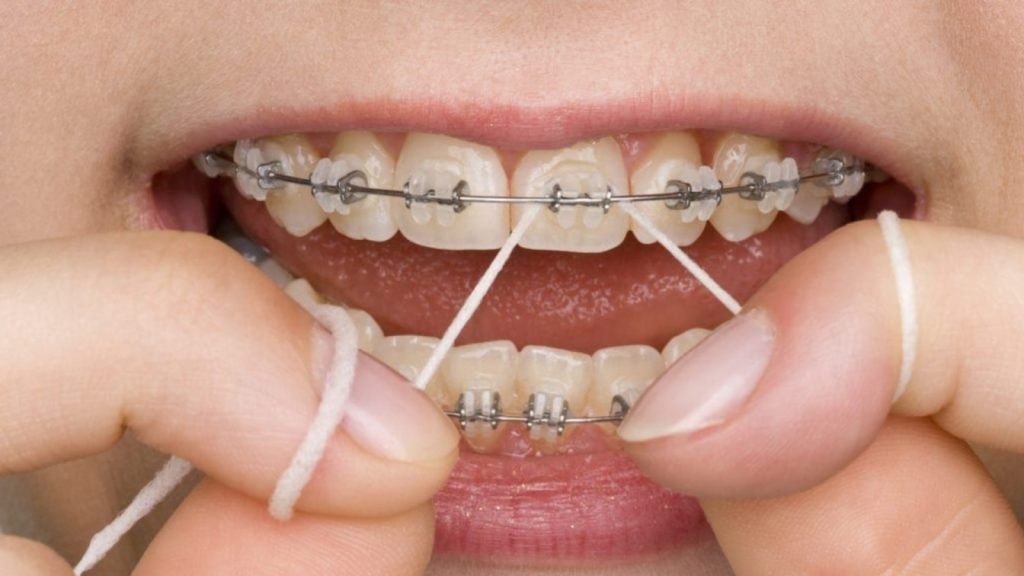
| Cleaning | Normal brushing/flossing after removing trays | Requires floss threaders/interdental brushes around wires |
| Sports & instruments | Remove trays; use a mouthguard | Mouthguards fit less easily over brackets |
Which Works Better for Your Case?
Case complexity is the biggest driver of both treatment time and invisalign vs braces cost, so here’s how the two options compare across common situations:
Overbite, Underbite & Crossbite
Invisalign can correct mild-to-moderate overbites and crossbites effectively. For moderate-to-severe bite discrepancies, jaw-related issues, or significant rotations, braces (sometimes combined with elastics or other orthodontic appliances) usually give an orthodontist more precise control.
Crowding & Spacing
Both work well for mild-to-moderate crowding and gaps. Severe crowding that needs tooth extraction or significant arch expansion is generally better managed with braces.
Invisalign vs Braces for Kids & Teens
For children under 12 with developing permanent teeth, braces (or interceptive appliances) remain the more common first-line option since they don’t rely on daily compliance. Teens with a full set of permanent teeth who are responsible about wearing trays 20–22 hours a day are good Invisalign candidates — Invisalign Teen even includes compliance indicators that fade with wear time, which helps parents track usage.
Invisalign vs Braces for Adults
Most adult patients at our Mississauga clinic prefer Invisalign for its discretion at work and in social settings, provided their case falls in the mild-to-moderate range. Adults with more complex bite issues, or who want the fastest possible fixed-schedule treatment without relying on self-discipline, often choose braces instead.
Invisalign vs Braces: Pros and Cons
Weighing invisalign vs braces cost against convenience and effectiveness usually comes down to this pros-and-cons snapshot:
Invisalign
Pros: nearly invisible, removable for eating/cleaning, fewer office visits, generally more comfortable day-to-day.
Cons: requires strict wear-time discipline, easy to lose/forget trays, not ideal for severe bite or rotation cases.
Braces
Pros: works for virtually any case severity, no compliance needed, often slightly less expensive upfront.
Cons: visible, food restrictions, harder to clean around brackets, occasional emergency visits for broken wires/brackets.
How to Decide: A Quick Checklist
Bringing the full invisalign vs braces cost and lifestyle comparison together, here’s a simple way to decide:
- Choose Invisalign if: your case is mild-to-moderate, appearance matters to you, and you can commit to 20+ hours/day of wear.
- Choose braces if: you have a complex bite or crowding issue, you’re under 12, or you’d rather not rely on removable-appliance discipline.
- Either way: get a same-visit cost estimate and insurance pre-approval before committing — the “cheaper” option on paper can flip once your specific case and coverage are factored in.
Why Patients Choose Eglinton Oak Dental for Invisalign & Braces
Eglinton Oak Dental is a family and cosmetic dental clinic at 3960 Eglinton Ave W, Mississauga (Erin Mills/Central Erin Mills), rated 4.8★ from 322 patient reviews. Our team, including Dr. Sahil Gagnani, provides complimentary Invisalign and braces consultations, in-house payment plans, and direct insurance billing assistance so you know your real out-of-pocket cost before you start treatment. We’ll walk you through the full invisalign vs braces cost comparison for your specific case at your first visit.
Frequently Asked Questions
Here are the invisalign vs braces cost questions we’re asked most often at our Mississauga clinic:
Is Invisalign or braces cheaper?
Metal braces are usually slightly cheaper upfront ($3,000–$7,500) than Invisalign ($3,500–$8,000), but the gap is often small once insurance coverage and payment plans are applied. Ceramic and lingual braces typically cost more than standard Invisalign.
How much does Invisalign cost in Mississauga?
Most Invisalign patients at our Mississauga clinic pay between $3,500 and $8,000 total, depending on case complexity, with many mild-to-moderate cases in the $4,500–$6,500 range.
How much do braces cost in Mississauga?
Metal braces range from about $3,000 to $7,500; ceramic braces from $4,000 to $8,500; lingual (hidden) braces from $8,000 upward.
Does insurance cover Invisalign and braces the same way?
Most plans cover both under a general orthodontic benefit (often 25–50% up to a lifetime maximum), but a small number of older policies only reimburse “braces” by name. Always confirm your plan explicitly covers Invisalign before starting.
Does the Canadian Dental Care Plan (CDCP) cover Invisalign or braces?
No, not for elective adult orthodontic treatment as of 2026. Limited coverage may apply only to specific medically necessary pediatric cases through provincial or CDCP-approved assessment — ask our team to help confirm your eligibility.
Which is faster, Invisalign or braces?
Invisalign is often faster for mild-to-moderate cases (as little as 4–18 months). Braces typically take 18–24 months but can be more efficient for complex bite corrections.
Can Invisalign fix an overbite as well as braces?
Yes, for mild-to-moderate overbites. Moderate-to-severe bite discrepancies usually respond better to braces or braces combined with other orthodontic appliances.
Are braces better than Invisalign for kids?
For children under 12 still developing their permanent teeth, braces are typically the standard first option. Teens with all permanent teeth and good compliance are often strong Invisalign candidates.
Can I get a payment plan for Invisalign or braces?
Yes. Eglinton Oak Dental offers in-house monthly payment plans for both options, typically $125–$310 a month depending on the appliance and total treatment cost.
What affects the total cost of Invisalign vs braces the most?
Case complexity is the single biggest factor, followed by appliance type (metal vs ceramic vs lingual, or Invisalign Express vs Comprehensive) and whether you have orthodontic insurance coverage.
Can adults get braces too, or is it too late?
It’s never too late — a growing share of our braces patients are adults. Braces work the same way regardless of age; the main difference is that adult treatment sometimes takes slightly longer since jaw growth has finished.
What happens if I don’t wear my Invisalign aligners enough?
Teeth can shift back toward their original position, which may require refinement aligners or extend your total treatment time and cost. This is the main reason braces are sometimes recommended over Invisalign for patients who know they’ll struggle with consistent wear.
Is teeth whitening included with Invisalign or braces treatment?
Not usually as a default, but many clinics, including Eglinton Oak Dental, offer a whitening session or discount as a completion bonus once your retainer is fitted — ask about this when you book your consultation.
How often are check-up visits during treatment?
Invisalign check-ins are typically every 6–8 weeks; braces adjustment visits are typically every 4–6 weeks. Both are shorter, routine appointments rather than full procedures.
Sources & Further Reading
Save On Invisalign Treatment
$2,000OFF
Comprehensive Clear Aligner Treatment
- Free Invisalign consultation
- Complimentary digital 3D smile preview
- No-obligation, no-pressure assessment
- Flexible payment plans available
Limited-time offer for new patients. Takes less than a minute to book.