
- Home
- About Us
- Services
- Reviews
- New Patients
- Contact Us
- Call (905) 607-1112
- Home
- About Us
- Services
- Reviews
- New Patients
- Contact Us
- Call (905) 607-1112
We are now accepting the Canadian Dental Care Plan —
Learn More

Close the gaps, restore your bite, and feel confident again with custom dental bridges designed for comfort, strength, and a natural look.
✔ Eat comfortably without limitations
✔ Speak clearly and confidently
✔ Restore your smile in just a few visits
Dental bridges are custom-made restorations designed to replace one or more missing teeth. They fill the gap left by tooth loss using nearby teeth or dental implants for support.
The replacement tooth (called a pontic) is carefully crafted to blend in with your natural smile, restoring both appearance and function. At Eglinton Oak Dental, we design bridges that are durable, comfortable, and tailored specifically to your bite.
Beyond aesthetics, dental bridges play a key role in maintaining your oral health. By filling gaps, they help distribute bite pressure evenly and prevent unnecessary strain on surrounding teeth.
A dental bridge may be the right solution if you:
Replacing missing teeth early can help avoid long-term complications such as bite misalignment, jaw discomfort, and further tooth loss.
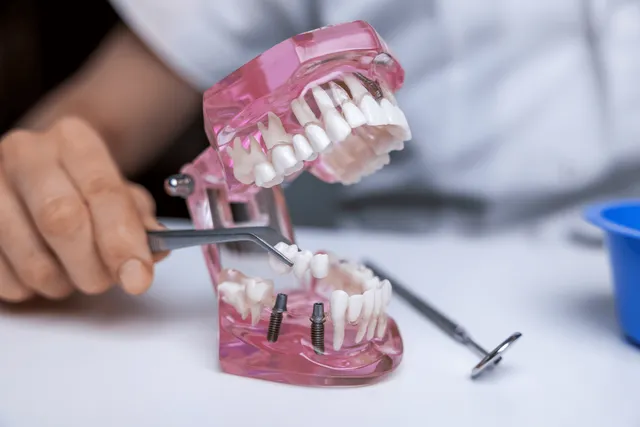
We offer different types of bridges based on your needs:
Traditional Bridges – Supported by crowns on adjacent teeth (most common)
Cantilever Bridges – Used when support is available on only one side
Maryland Bridges – Bonded using a metal or porcelain framework
Implant-Supported Bridges – Anchored by dental implants for maximum stability
Your dentist will recommend the best option based on your oral health, bone structure, and long-term goals.
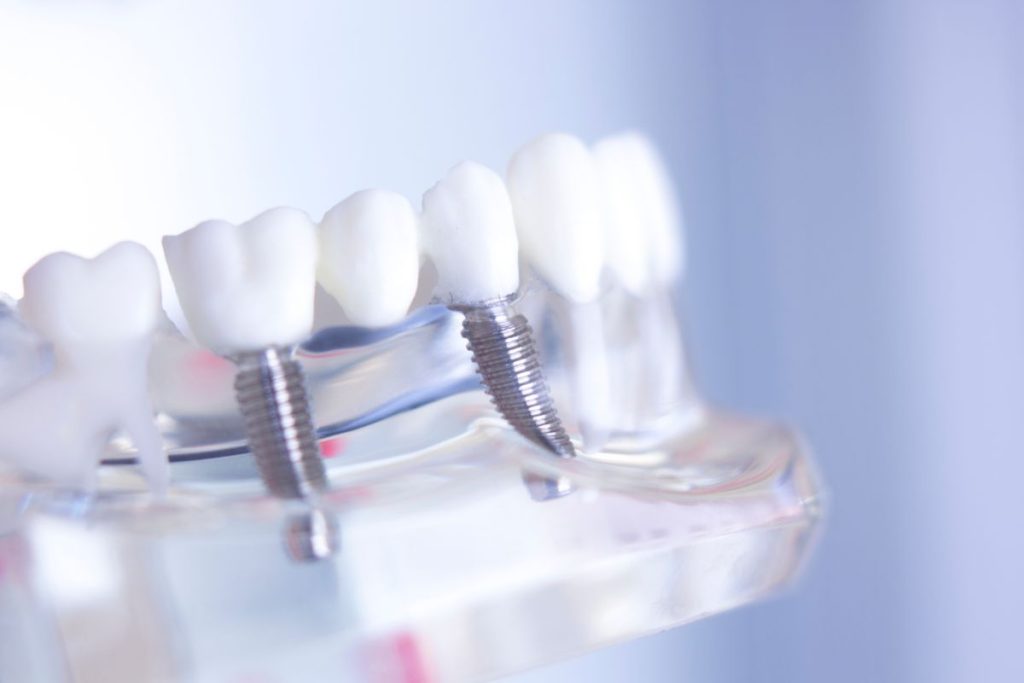
A dental bridge may be ideal if you want to:
A consultation at Eglinton Oak Dental will help determine the best treatment option for your specific needs.

Dental bridges are a reliable, effective solution for replacing missing teeth and restoring your quality of life.
At Eglinton Oak Dental, we combine advanced technology with personalized care to deliver results that look natural and feel comfortable.
A dental bridge in Mississauga typically costs between about $2,000 and $5,000. The final price depends on:
We give you a written estimate after your exam and X-rays, and we check your insurance before any work starts. Many private plans pay part of a bridge under major services. Coverage under the Canadian Dental Care Plan (CDCP) depends on your situation, and we confirm it for you.
Most bridges take two visits. If an anchor tooth needs a root canal or a build-up first, we include that in your plan and estimate.
| Dental bridge | Dental implant | Partial denture | |
|---|---|---|---|
| Surgery needed? | No | Yes, a small surgical procedure | No |
| Typical time to finish | About 2–3 weeks, 2 visits | About 3–6 months | About 2–4 weeks |
| Effect on neighbouring teeth | Anchor teeth are reshaped for crowns | Neighbouring teeth are not touched | Clasps rest on nearby teeth |
| Removable? | No, it is cemented | No, it is fixed | Yes, you take it out to clean it |
| How long it lasts | Usually 10–15 years or longer with care | The post can last decades; the crown may need replacing in 10–15 years | Usually several years before relining or replacing |
| Upfront cost | Moderate | Highest | Lowest |
A bridge is often the best fit when the teeth next to the gap already have large fillings or crowns, or when you prefer to avoid surgery. An implant is usually the better long-term choice when the neighbouring teeth are healthy. Read more in our dental implant cost and procedure guide.
Bridges are reliable, but you should know the trade-offs before you decide:
Good home care and regular checkups deal with most of these risks. We show every bridge patient how to clean under it before they leave.
A dental bridge in Mississauga typically costs between about $2,000 and $5,000 depending on the number of teeth and materials. We provide a clear quote and review your insurance coverage before treatment.
Implants last longer and protect the jawbone but cost more and take longer, while bridges are quicker and more affordable but rely on the neighbouring teeth. We help you choose the best option for your health and budget.
With proper care, dental bridges typically last 10–15 years or longer.
Yes, once placed, they feel natural and allow you to chew and speak normally.
Most bridges need two visits: one to prepare the neighbouring teeth and take a scan or impression, and one a couple of weeks later to fit the final bridge. You wear a temporary bridge in between.
Yes, modern bridges are designed to match your natural teeth in color, shape, and size.
Most private plans cover part of a bridge under major services. Coverage under the Canadian Dental Care Plan depends on the situation and may need pre-approval. We check your plan before treatment.
Brush twice a day and clean under the false tooth daily with a floss threader, super floss or a water flosser to prevent decay and gum problems.
Yes. A bridge can replace one or several teeth in a row, as long as the supporting teeth or implants on each side are strong enough.
The main types are traditional bridges supported by crowns on the neighbouring teeth, resin-bonded (Maryland) bridges for some front teeth, and implant-supported bridges when several teeth are missing.
Yes. Bridges are still a common, well-proven way to replace one or more missing teeth, especially when the neighbouring teeth already need crowns or when a patient prefers to avoid implant surgery.
Over time the teeth next to the gap can tip into the space, the opposite tooth can drift, and your bite can change. The bone where the tooth was also slowly shrinks. Replacing the tooth with a bridge, an implant or a partial denture helps prevent this.
Limited-Time Anniversary Offer
Straighter Teeth, Without Braces
Comprehensive clear aligner treatment at Eglinton Oak Dental, Mississauga. Save up to $2,000.
*Limited-time offer for new patients. Candidacy and full details confirmed at your consultation.